A bathroom should be more than a functional space. It should feel calm, intentional, and quietly beautiful. If you’re searching for Japandi bathroom ideas, you’re likely drawn to clean lines, warm wood tones, soft textures, and a peaceful atmosphere that feels both modern and timeless. Japandi design blends Japanese simplicity with Scandinavian comfort, creating spaces that feel grounded, natural, and deeply livable.
In recent years, this style has become increasingly popular because it answers a real need: less visual noise, more meaning. A well-designed Japandi bathroom does not rely on excess decoration. Instead, it uses thoughtful materials, balanced proportions, and subtle contrasts to create warmth within minimalism. This guide explores the best 11 Japandi bathroom ideas to help you transform your space into a serene, spa-like retreat while staying practical and realistic about design decisions.
Understanding the Essence of Japandi Design
Before diving into specific Japandi bathroom ideas, it helps to understand the philosophy behind the style. Japandi is not just about aesthetics. It reflects a mindset rooted in functionality, craftsmanship, and natural beauty. From the Japanese side comes wabi-sabi, an appreciation for imperfection and organic materials. From the Scandinavian side comes hygge, a sense of comfort and everyday coziness.
In a bathroom setting, this translates into warm wood, stone textures, soft neutral colors, matte finishes, and uncluttered surfaces. Nothing feels overly polished or overly ornate. The goal is balance. Every element serves a purpose, and every detail feels intentional.
Incorporate Natural Wood for Warmth
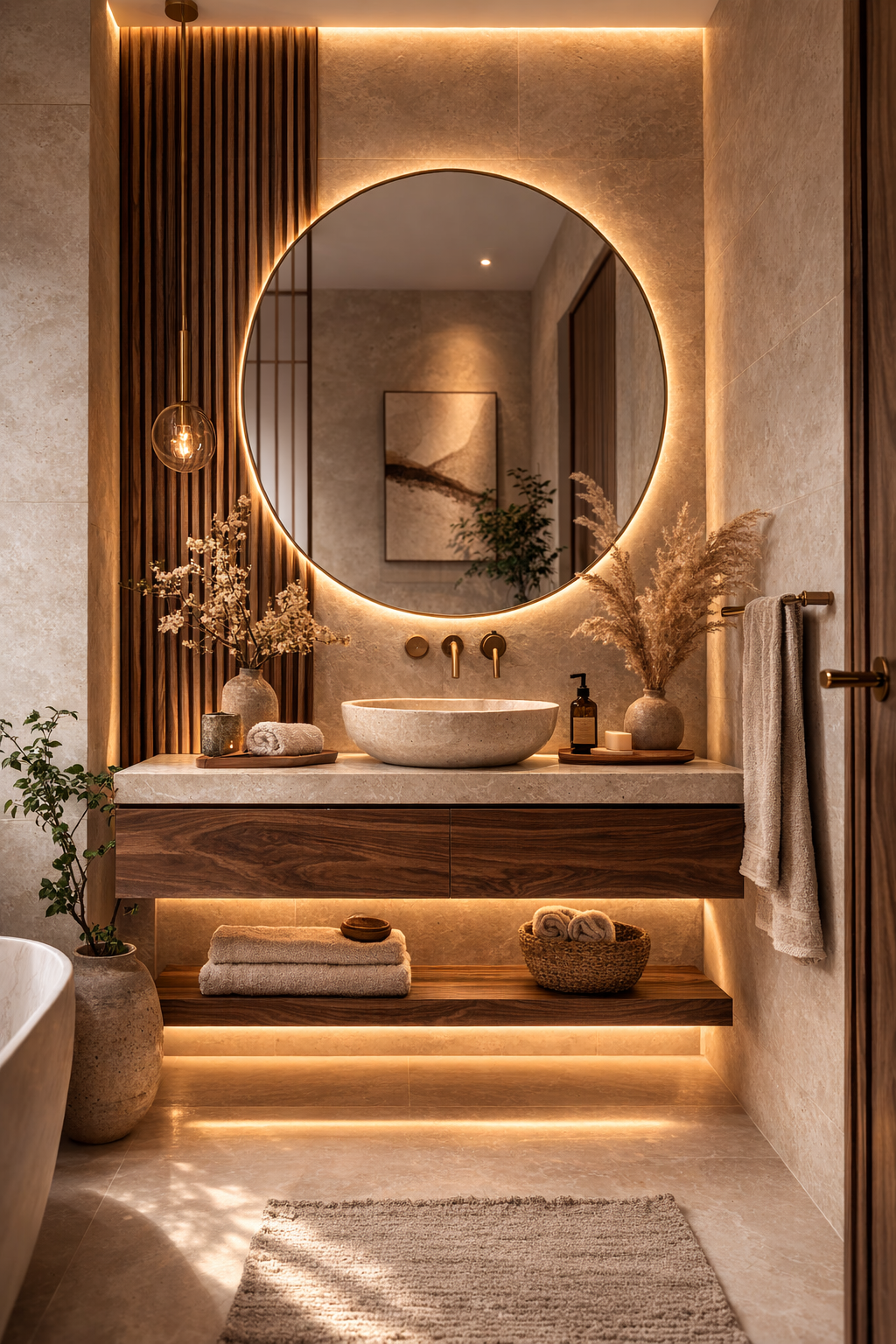
Natural wood is central to most Japandi bathroom ideas because it softens minimalism and adds life to the space. Floating vanities in oak, teak, or walnut bring warmth without overwhelming the design. The grain should be visible and authentic, not overly glossy or heavily stained.
Even in small bathrooms, a wooden vanity or open shelving can dramatically change the atmosphere. If full wood cabinetry is not practical due to moisture concerns, consider wood-framed mirrors or wooden accessories. Proper sealing and ventilation ensure durability while preserving the organic look.
The combination of wood and neutral tones creates a balanced environment that feels both modern and grounded.
Choose Clean, Simple Lines
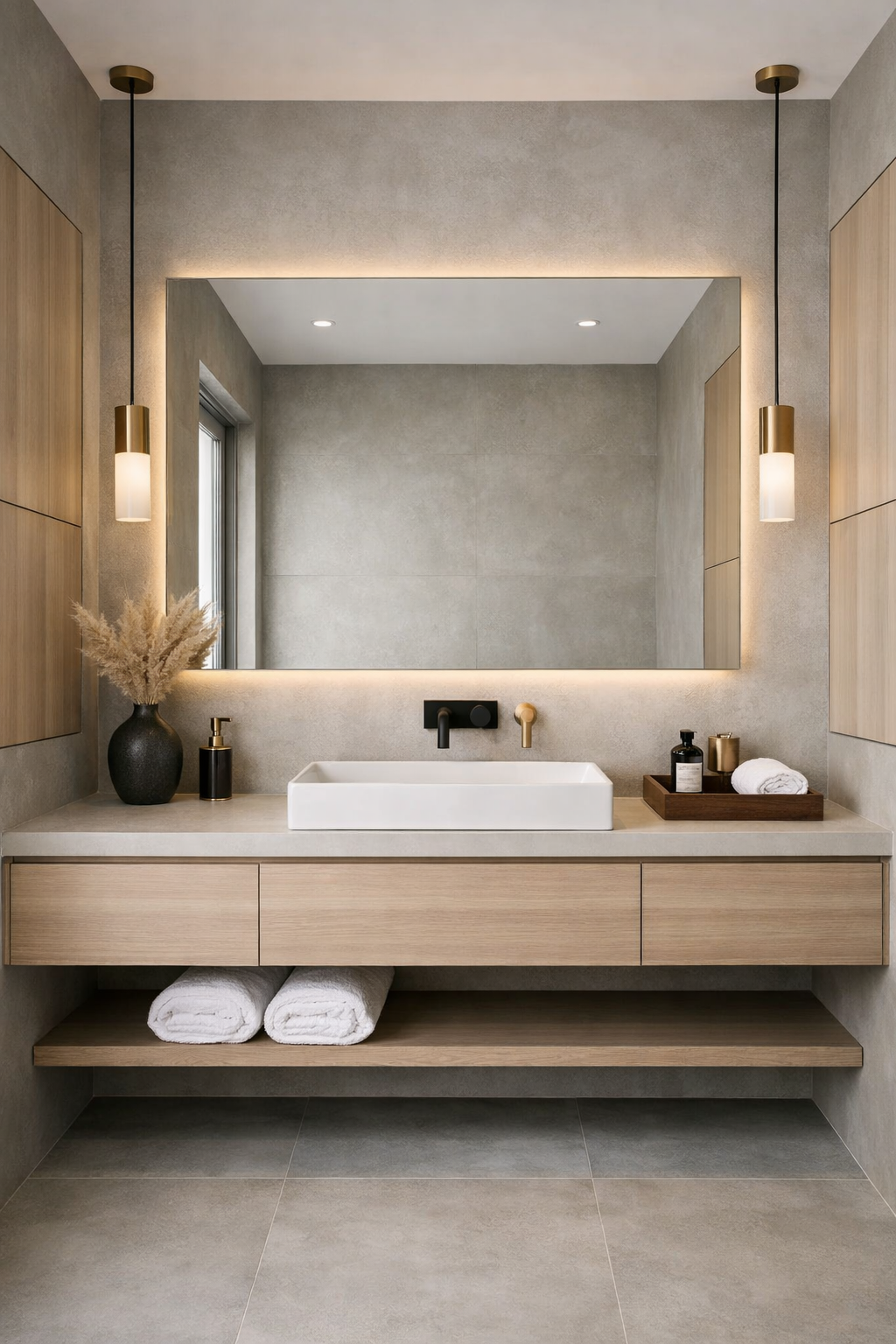
Minimalism in Japandi bathrooms is not about emptiness but clarity. Clean lines define the architecture and furniture. Wall-mounted vanities, frameless mirrors, and simple rectangular or oval basins create a sense of order.
Avoid ornate details, heavy moldings, or intricate tile patterns. Instead, focus on subtle geometry. Straight lines and gentle curves can coexist, as long as the overall composition feels harmonious.
When selecting fixtures, opt for matte black, brushed nickel, or soft brass finishes. These understated metals enhance the minimalist look without drawing excessive attention.
Highlight Natural Stone and Textured Surfaces
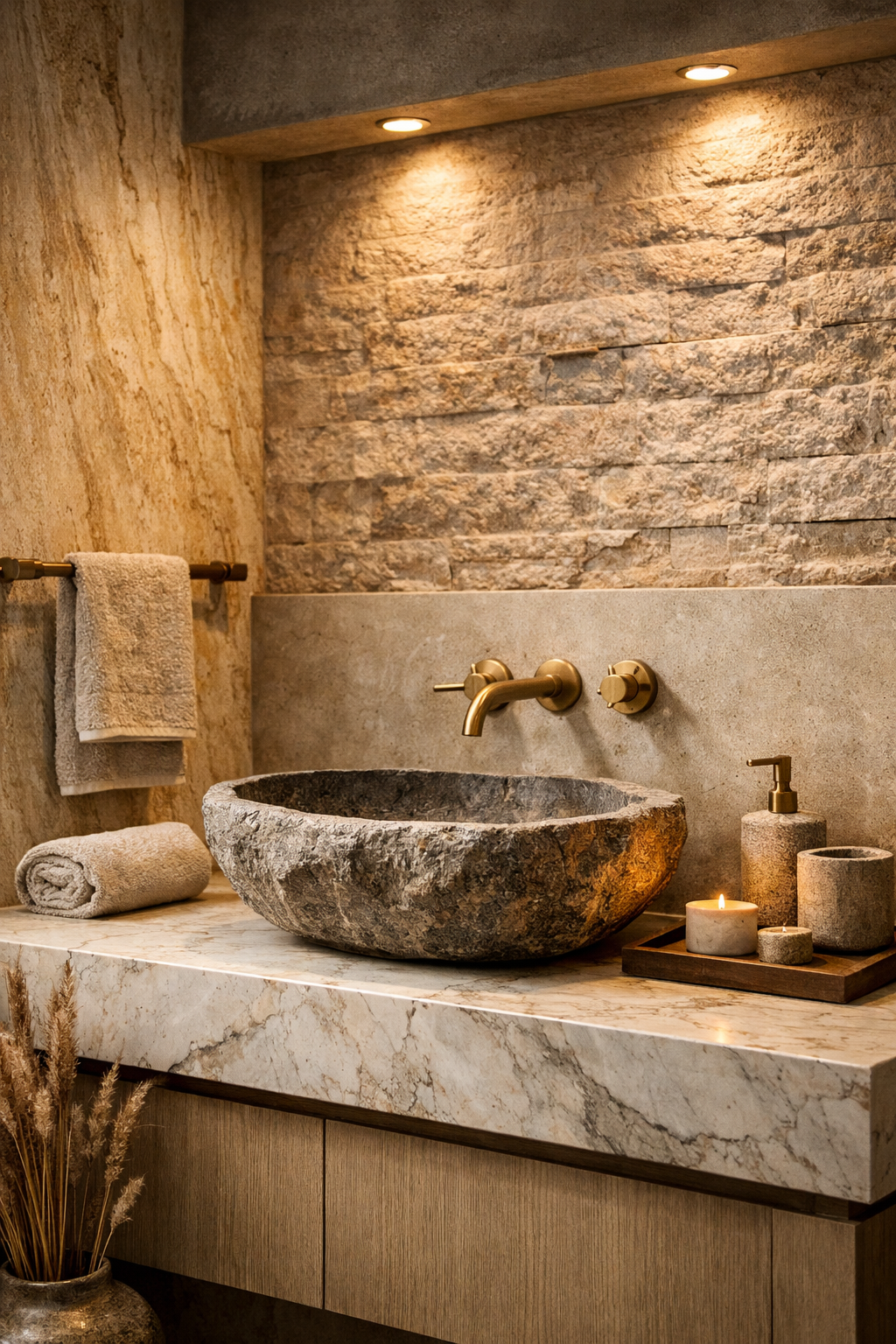
Texture plays a crucial role in successful Japandi bathroom ideas. Because the color palette is restrained, interest comes from materials. Stone sinks, textured tiles, and plaster walls add dimension without clutter.
A stone countertop with subtle veining can act as a focal point. Handmade ceramic tiles with slight variation reinforce the handcrafted feel. Microcement walls are also popular for their smooth yet tactile appearance.
The goal is to create depth through material rather than decoration. When surfaces have character, fewer accessories are needed.
Let Light Shape the Mood
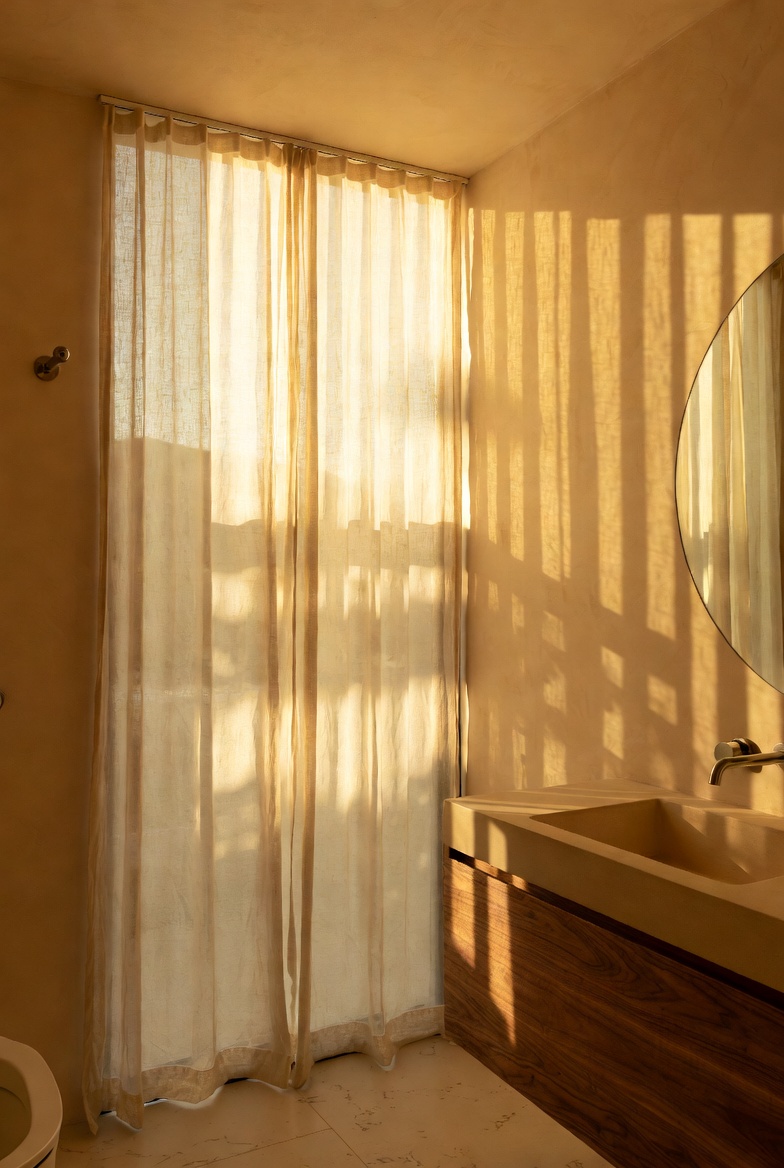
Lighting can make or break a Japandi bathroom makeover. Soft, diffused light enhances warmth and highlights natural textures. Whenever possible, maximize natural light through windows or skylights.
If natural light is limited, layered lighting becomes essential. Use warm-toned LED lighting to avoid harsh brightness. Wall sconces with simple designs provide ambient light, while recessed ceiling lights maintain a clean look.
Lighting should feel gentle and intentional, supporting the peaceful mood rather than dominating the space.
Create Open, Functional Storage
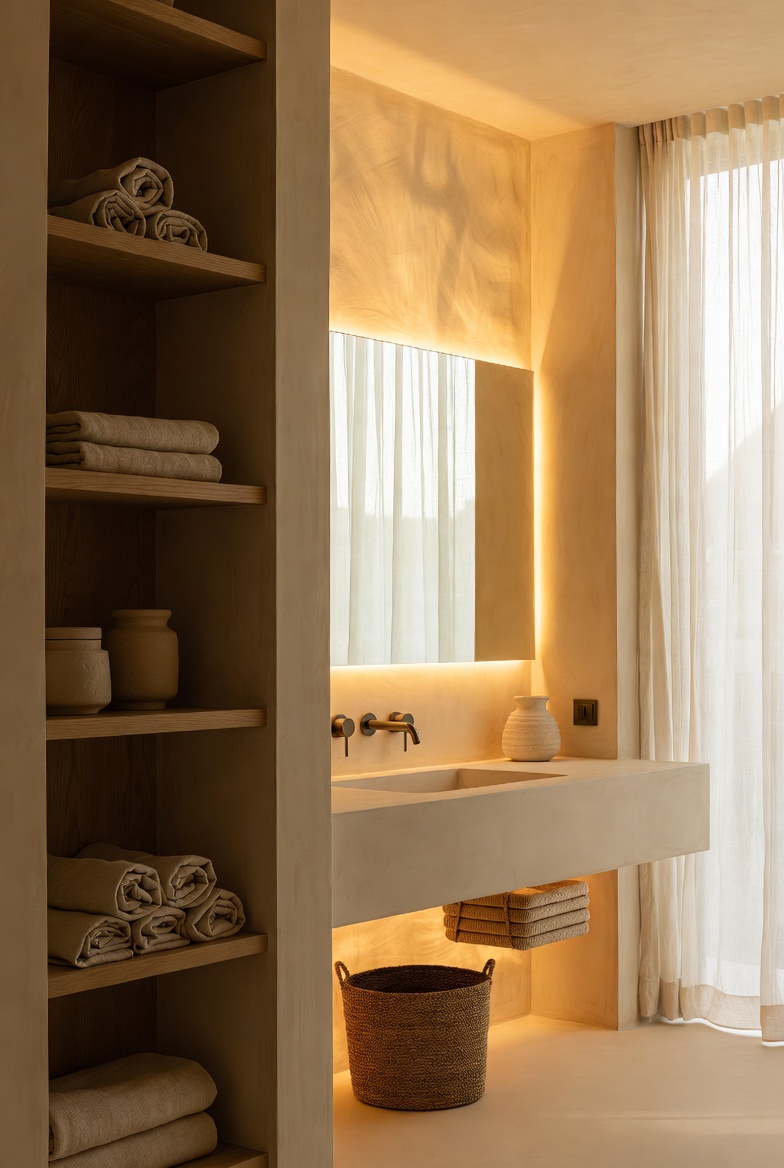
Clutter disrupts the calm aesthetic that defines Japandi bathroom ideas. Open shelving made of natural wood can store towels and daily essentials in an organized way. Woven baskets or simple ceramic containers keep small items contained without introducing visual chaos.
Closed storage should remain streamlined, with flat-panel doors and minimal hardware. The objective is to maintain clean surfaces while ensuring practical functionality.
Thoughtful storage planning prevents overcrowding and reinforces the minimalist philosophy.
Add Organic Greenery Sparingly
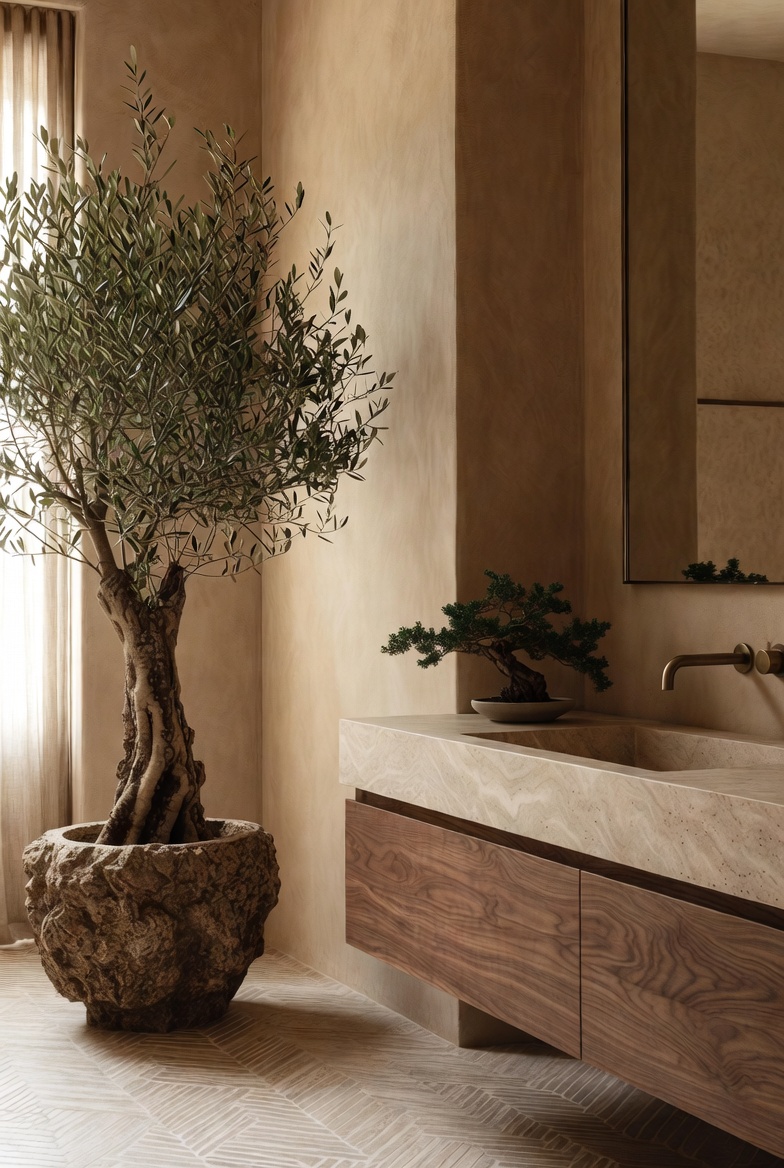
Plants bring life and freshness to a Japandi bathroom. A small potted plant on the vanity or a simple hanging plant near a window can enhance the organic atmosphere. Choose varieties that thrive in humidity and low light if necessary.
Greenery should feel natural and subtle, not decorative for decoration’s sake. A single well-placed plant often has more impact than multiple scattered arrangements.
This touch of nature connects the interior space to the outdoors, which is central to both Japanese and Scandinavian design principles.
Focus on Quality Over Quantity
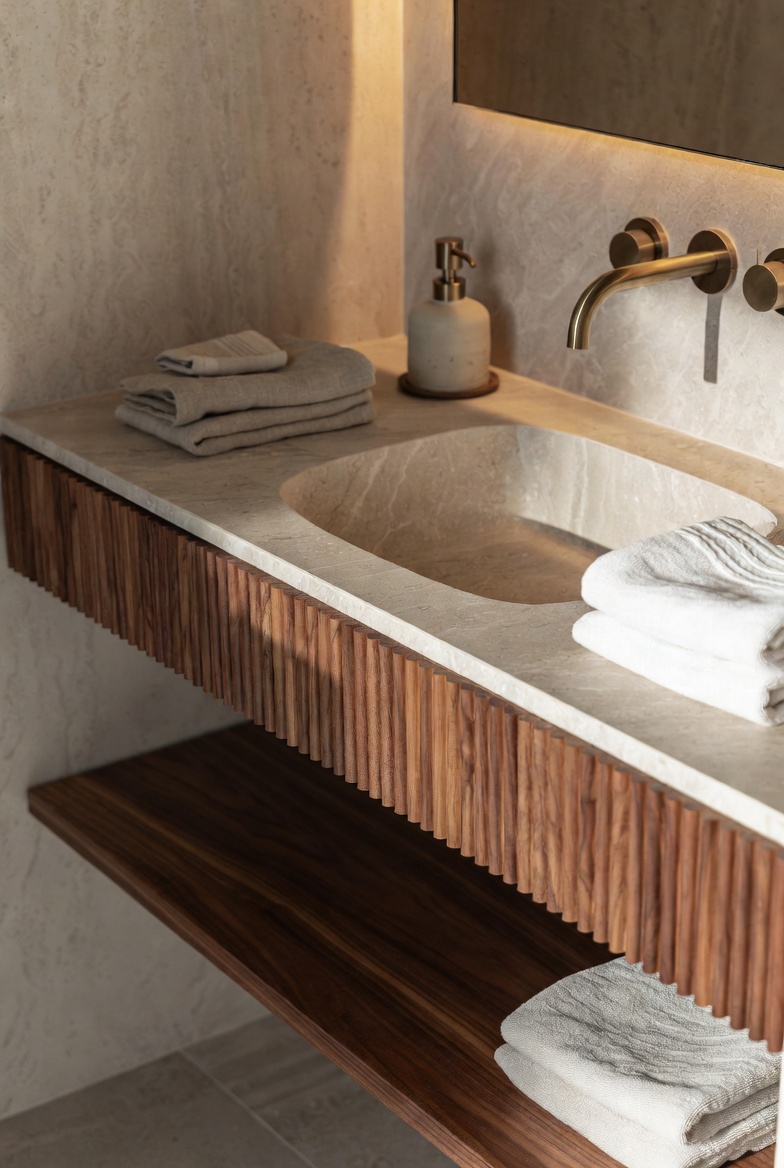
An important principle behind the best Japandi bathroom ideas is intentional selection. Instead of filling the space with accessories, invest in fewer, higher-quality pieces. A handcrafted ceramic soap dispenser or a well-made linen towel adds authenticity.
The beauty of Japandi lies in restraint. Each item should contribute to the overall harmony. This approach also supports sustainability, as durable materials reduce the need for frequent replacements.
Quality craftsmanship communicates quiet luxury without excess.
Introduce Soft Textiles for Balance
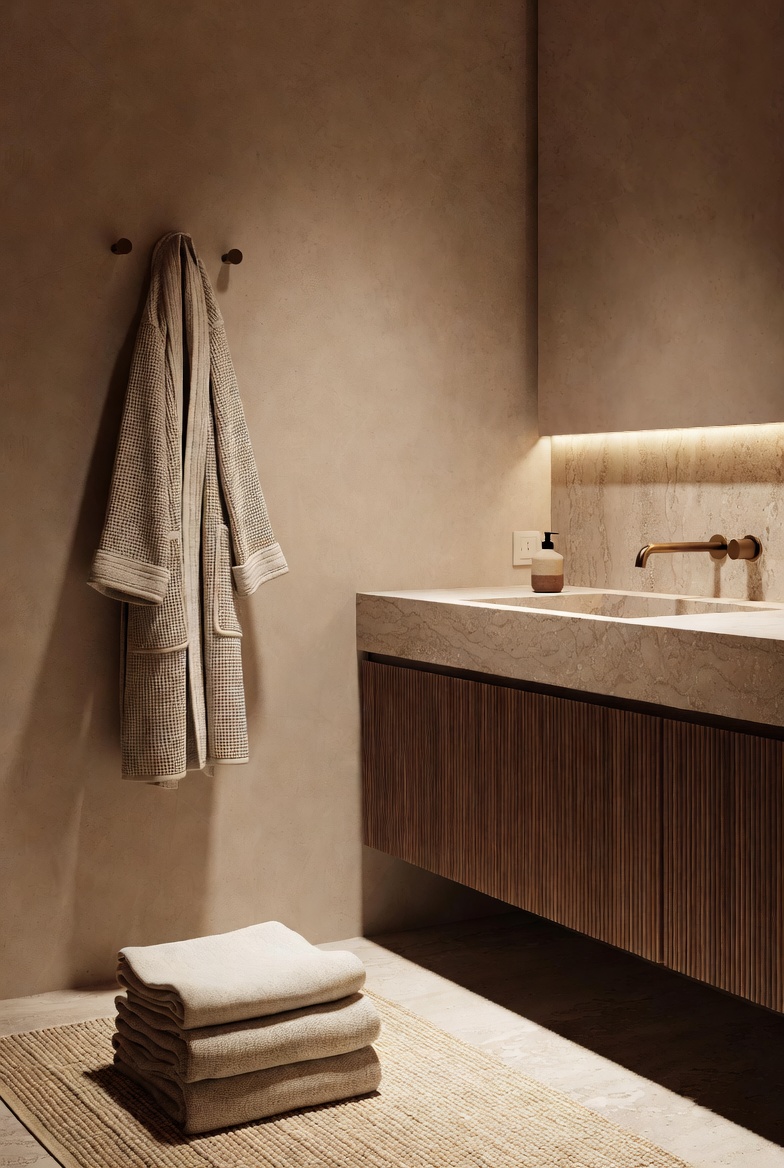
While minimalism can sometimes feel cold, textiles introduce warmth. Linen towels, woven bath mats, and simple fabric shower curtains add softness. Stick to neutral shades or muted earthy tones to maintain cohesion.
Natural fabrics align with the organic philosophy of Japandi design. Avoid bold prints or bright colors that disrupt the calm palette.
Textiles should complement the space rather than dominate it.
Opt for Freestanding or Sculptural Bathtubs
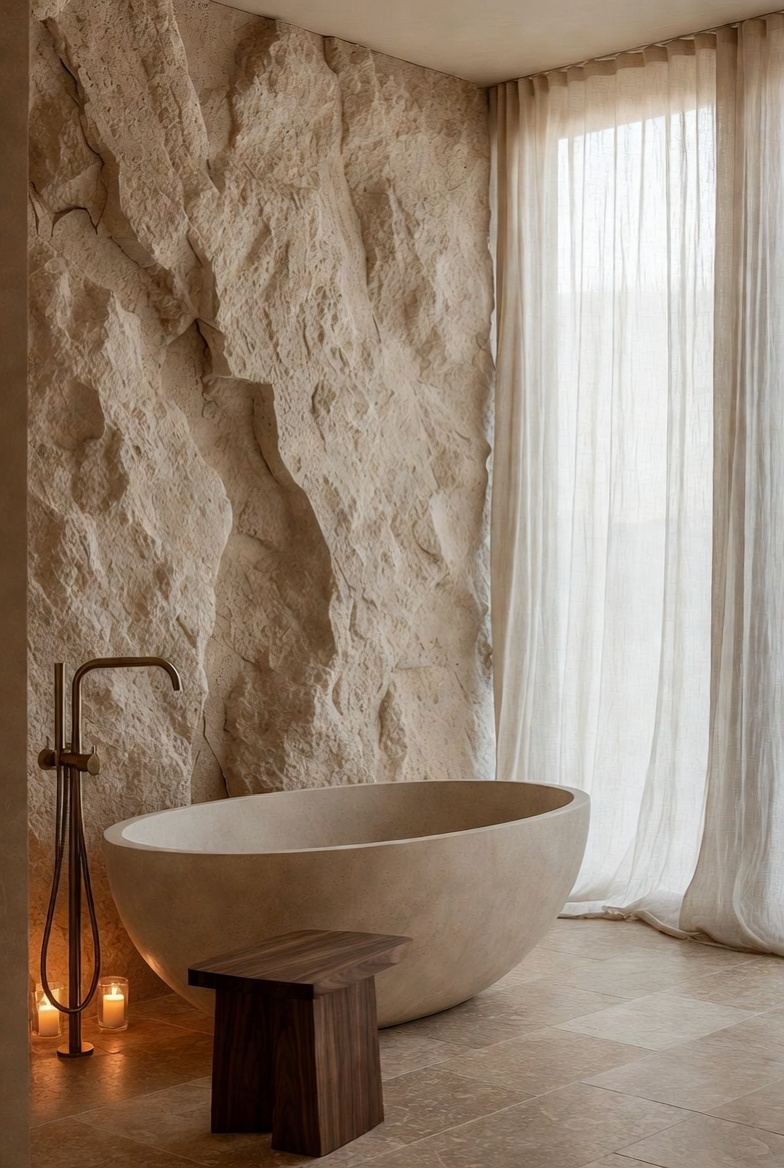
If space allows, a freestanding bathtub can become a statement feature in Japandi bathroom ideas. Choose a simple, sculptural shape in matte white or soft stone tones.
The design should feel organic and fluid rather than overly modern or angular. When paired with a floor-mounted faucet in matte black or brushed metal, the result is refined yet understated.
A bathtub in this style enhances the spa-like atmosphere while maintaining minimalist discipline.
Keep Décor Meaningful and Minimal
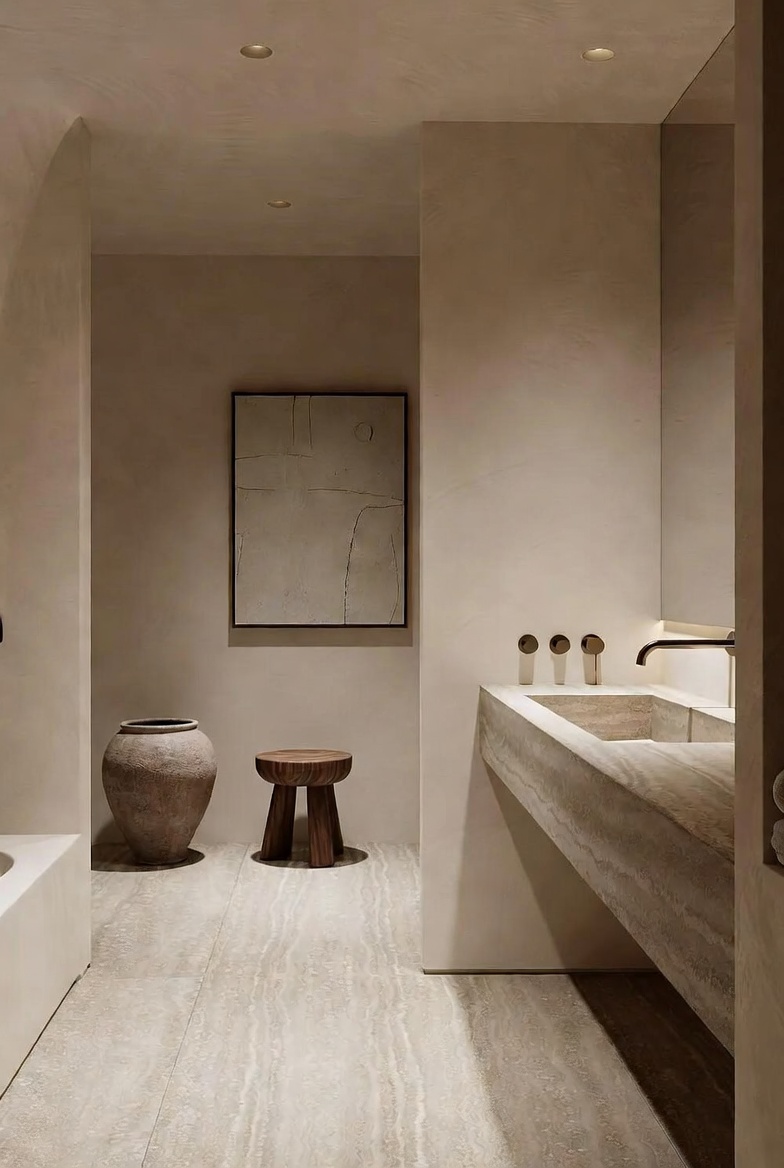
Decor in a Japandi bathroom should feel purposeful. A single framed abstract print, a ceramic vase, or a small wooden stool can add personality without overwhelming the design.
Negative space is important. Empty areas allow materials and light to breathe. Resist the urge to fill every surface.
The most successful Japandi bathroom ideas rely on balance, not abundance.
Design with Longevity in Mind
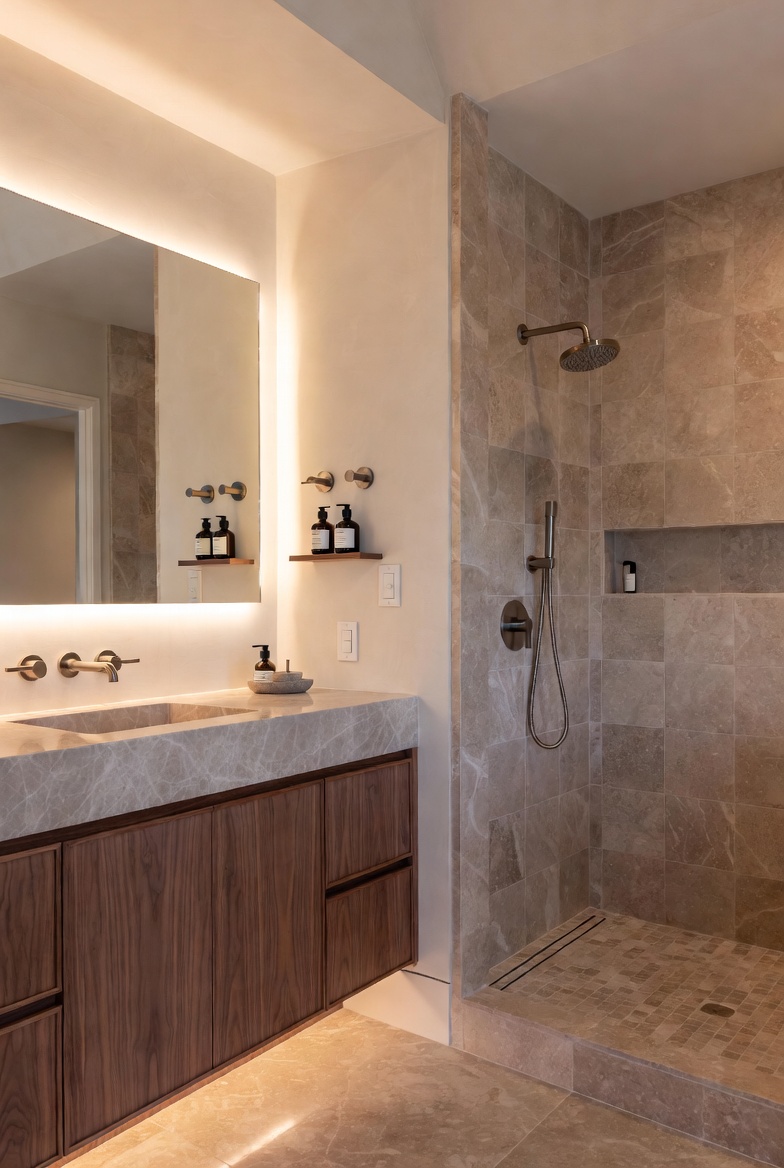
Trends evolve, but timeless materials endure. When planning a warm minimalist makeover, prioritize durability and classic design choices. Neutral palettes, natural materials, and simple forms rarely feel outdated.
By focusing on foundational elements rather than fleeting trends, you create a bathroom that remains stylish for years. Japandi design’s emphasis on sustainability and craftsmanship naturally supports long-term thinking.
This mindset not only enhances aesthetics but also adds value to your home.
Frequently Asked Questions
What defines a Japandi bathroom?
A Japandi bathroom blends Japanese minimalism with Scandinavian warmth. It features natural materials, neutral tones, clean lines, and a focus on functionality. The atmosphere is calm, balanced, and intentionally simple.
Are Japandi bathroom ideas suitable for small spaces?
Yes, they work especially well in small bathrooms. The minimalist approach reduces clutter and emphasizes light, making compact spaces feel more open and organized.
What colors are best for a Japandi bathroom?
Warm neutrals such as beige, soft gray, cream, taupe, and muted green are ideal. These colors create a soothing environment while allowing natural materials to stand out.
How do I make my bathroom look warm but minimalist?
Combine simple lines with warm materials like wood and stone. Use soft lighting and neutral textiles. Keep décor minimal and focus on quality rather than quantity.
Is Japandi design expensive to achieve?
It does not have to be. While high-quality materials can increase costs, the minimalist nature of Japandi design often reduces unnecessary spending. Thoughtful planning and selective investment make it accessible.
Conclusion
The best 11 Japandi bathroom ideas for a warm minimalist makeover are rooted in balance, intention, and natural beauty. By embracing earthy tones, incorporating natural wood, highlighting texture, and maintaining clean lines, you can create a space that feels serene yet inviting. Japandi design is not about following a trend but about adopting a philosophy that values craftsmanship, simplicity, and comfort.
When thoughtfully executed, these Japandi bathroom ideas transform an ordinary bathroom into a restorative retreat. The result is a space that supports daily rituals with calm elegance, proving that minimalism does not mean cold or empty. Instead, it means purposeful, warm, and timeless design that continues to feel relevant long after passing trends fade.