
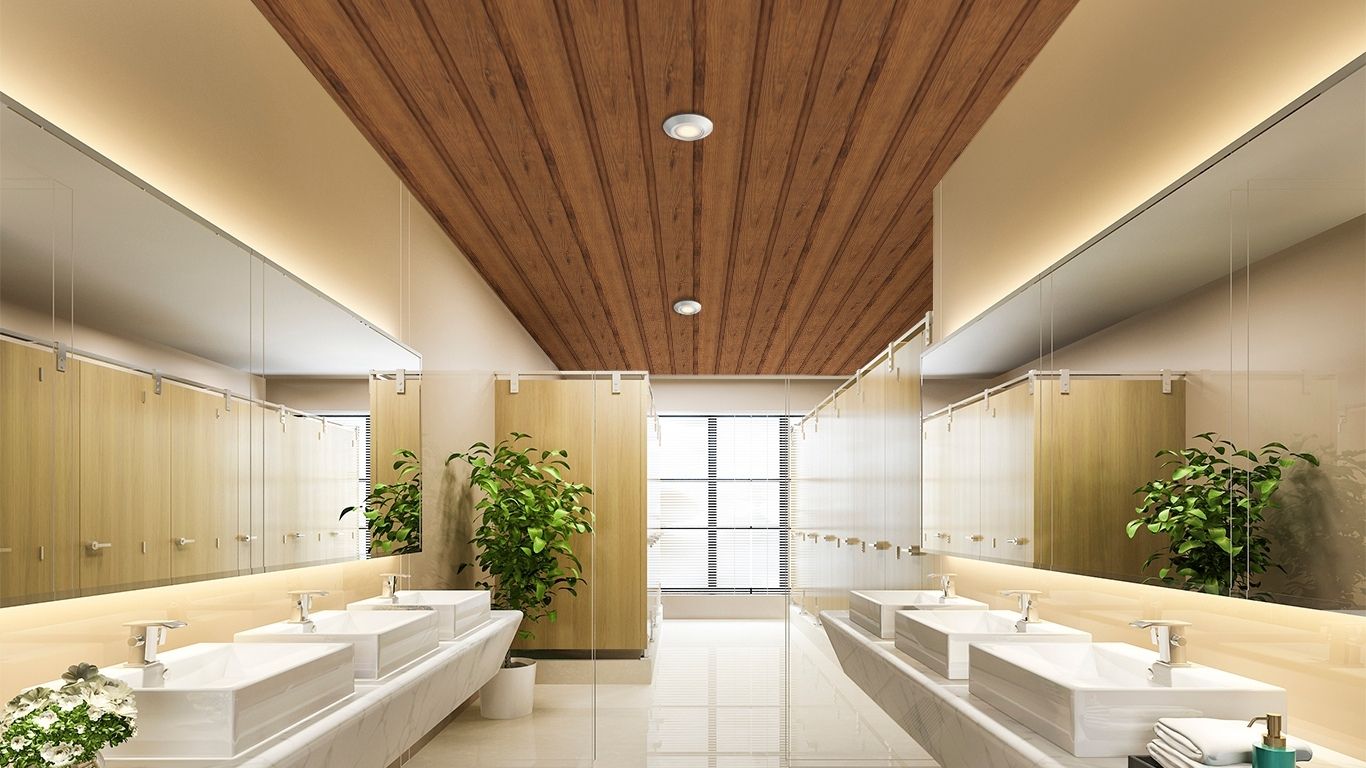
11 Beautiful Wood Ceiling Bathroom Ideas: Warm, Natural, and Moisture-Resistant Designs
The bathroom serves as more than a place for daily routines—it’s a retreat where comfort and aesthetics come together to create a sense of calm and renewal. If you’re drawn to wood ceiling bathroom designs, you’re embracing one of the most effective ways to introduce warmth, texture, and natural beauty into what can otherwise feel like a cold, tiled space. Drawing from years of following interior trends and assisting with real home renovations, I’ve seen how a thoughtfully chosen wood ceiling transforms the entire room, making it feel more inviting and spa-like while addressing practical concerns like humidity. In 2026, with a strong emphasis on organic materials, sustainable choices, and timeless warmth, wood ceilings stand out for their ability to balance modern luxury with enduring functionality. These 11 ideas focus on moisture-resistant approaches, ensuring beauty that lasts without constant worry over warping or mold.
1. Cedar Planks for Natural Aroma and Resilience
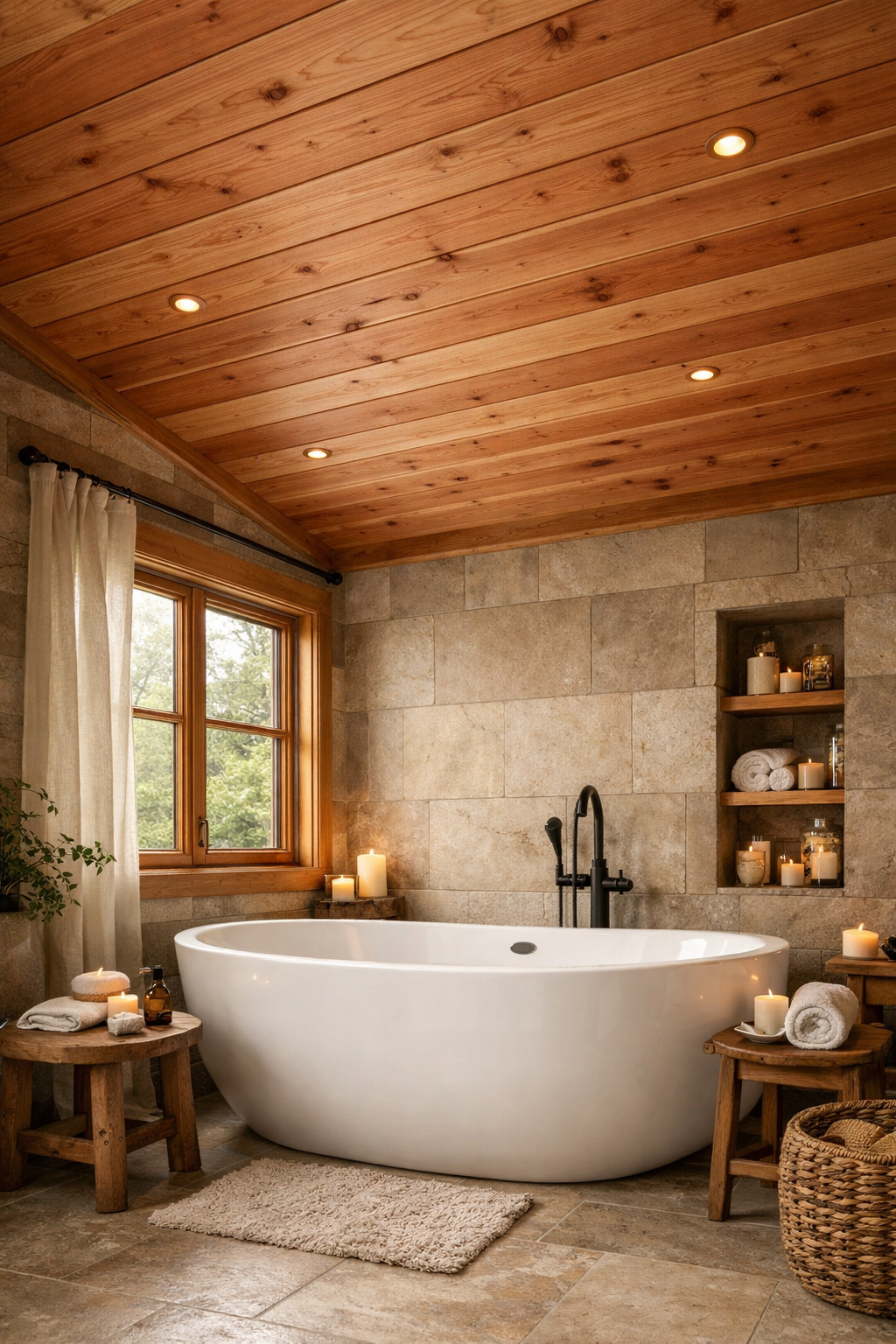
Cedar ranks among the top choices for a wood ceiling bathroom due to its inherent oils that naturally repel moisture and insects. The light reddish tones and subtle grain create a cozy, cabin-inspired atmosphere, while the faint aromatic quality lingers pleasantly in the air. When installed with proper ventilation and a clear sealant, cedar holds up remarkably well against steam, making it ideal for showers or tubs positioned directly below. This design pairs beautifully with neutral walls and stone accents, allowing the ceiling to become the room’s warm focal point.
2. Whitewashed Pine for Bright, Coastal Vibes
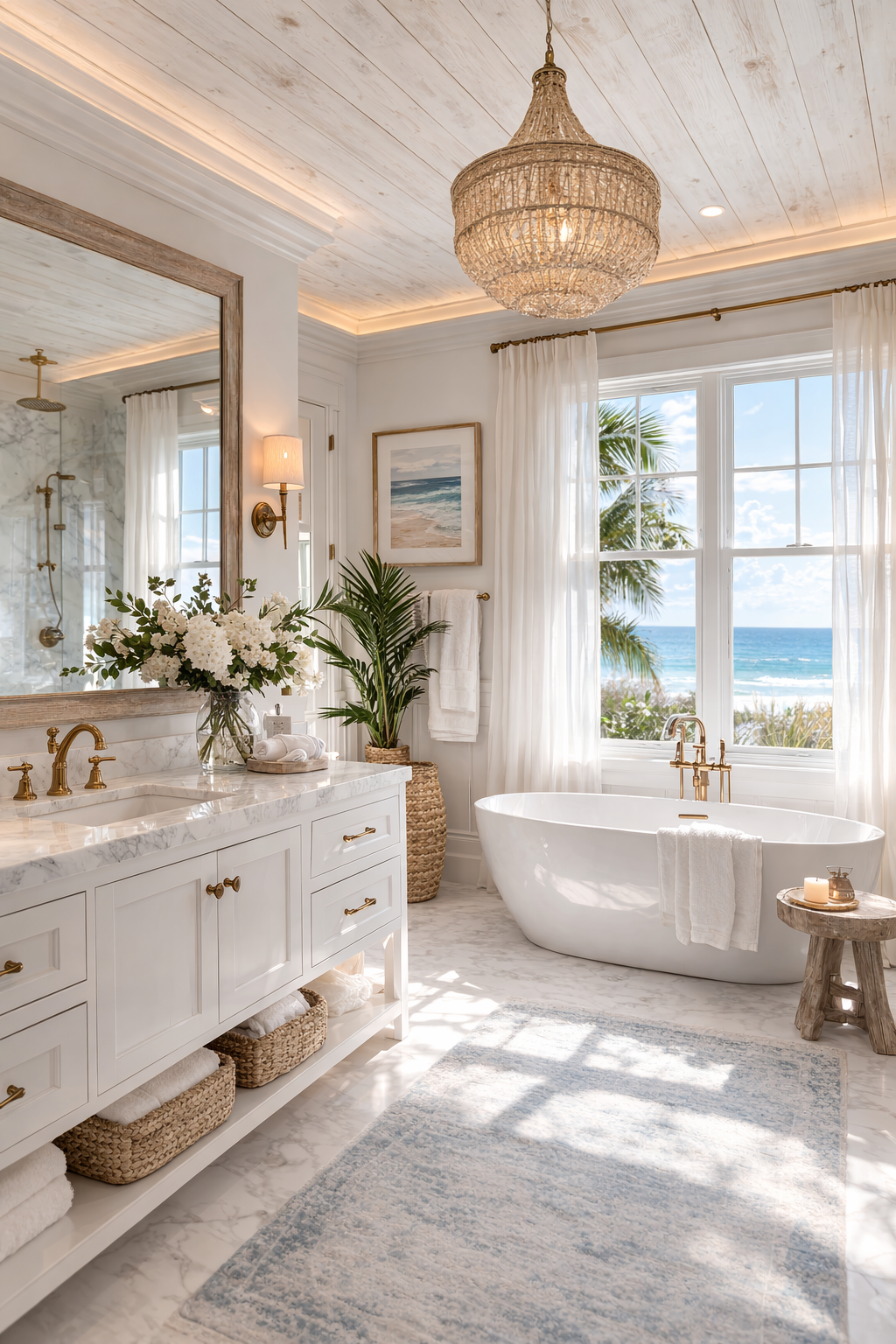
Whitewashing pine boards softens the wood’s natural yellow undertones, resulting in a fresh, airy look that expands smaller bathrooms visually. The process involves diluting white paint and wiping it on, preserving the grain while adding a subtle coastal or Scandinavian feel. Pine, though softer, becomes surprisingly durable in humid settings when treated with marine-grade varnish. This approach keeps the space light and inviting, especially when combined with blue-gray tiles or white fixtures for a serene, beach-house escape.
3. Reclaimed Oak Beams for Rustic Character
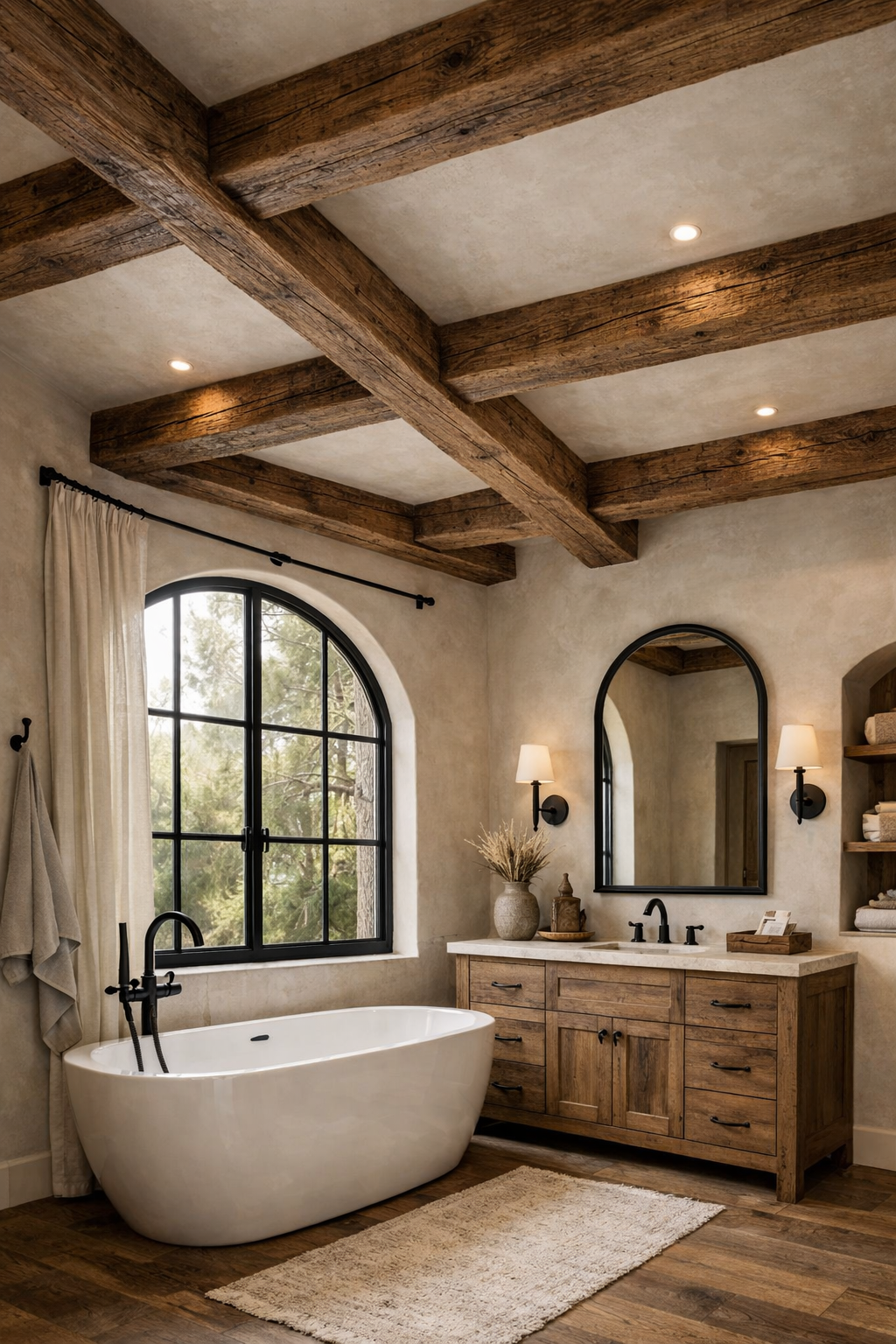
Exposed reclaimed oak beams bring authentic texture and history to a wood ceiling bathroom. The varied grain patterns and weathered patina add depth without needing elaborate decoration. Oak’s density helps it resist swelling when sealed properly, and sourcing reclaimed material supports sustainability—a key consideration in current designs. Position beams sparingly across a flat ceiling or in a vaulted layout to draw the eye upward, creating an illusion of height while complementing earthy vanities or matte black hardware.
4. Teak Panels for Luxury and Longevity
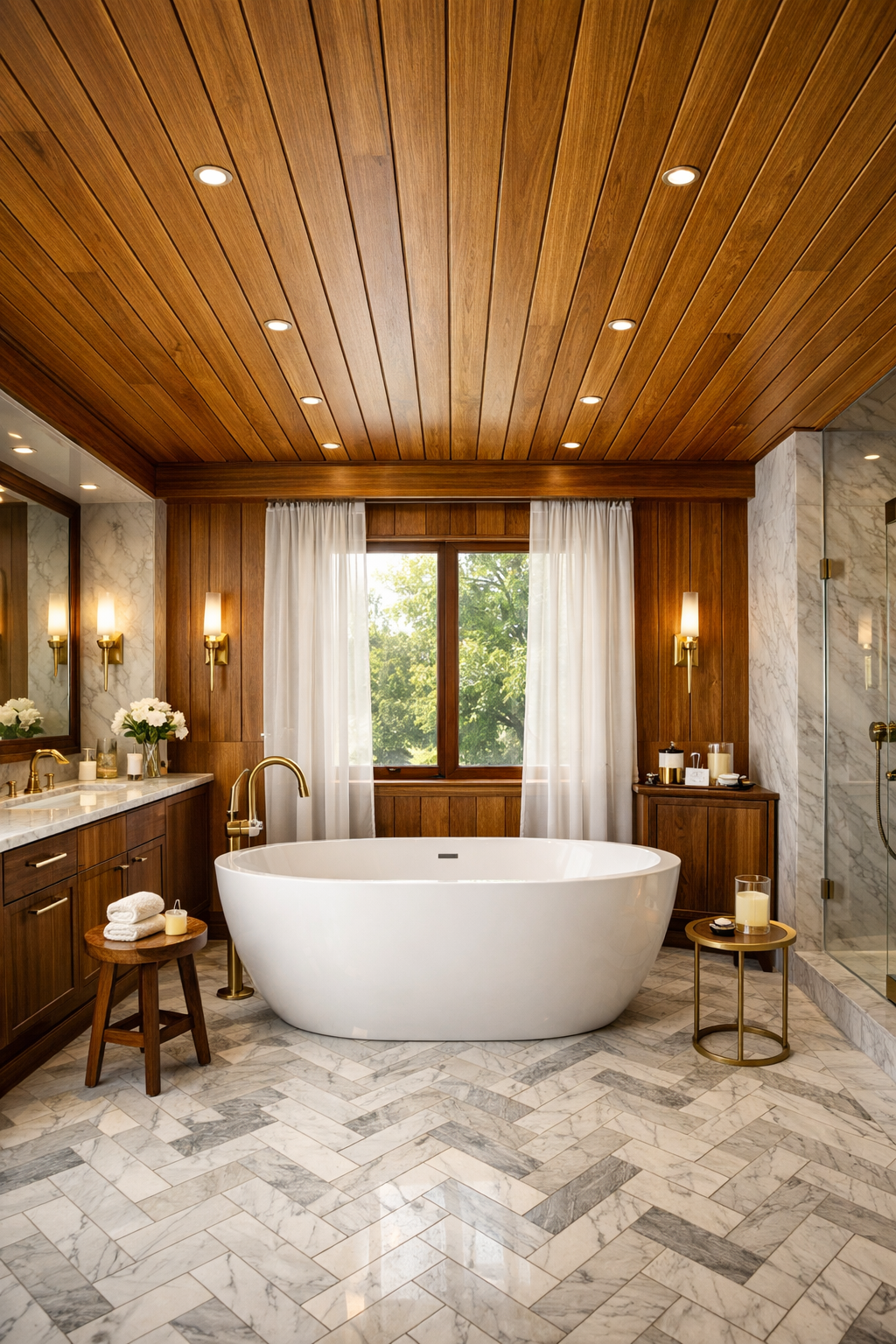
Teak, prized for its marine heritage, offers exceptional moisture resistance thanks to natural oils that prevent rot and decay. Honey-gold hues with straight grain deliver understated elegance, suiting contemporary or spa-style bathrooms. Teak panels, tongue-and-groove or shiplap style, install smoothly and maintain stability even in steamy conditions with minimal additional treatment. This premium choice elevates the room’s sophistication, pairing well with marble surfaces and brass fixtures for a timeless, high-end appearance.
5. Light Oak Slats with Open Spacing
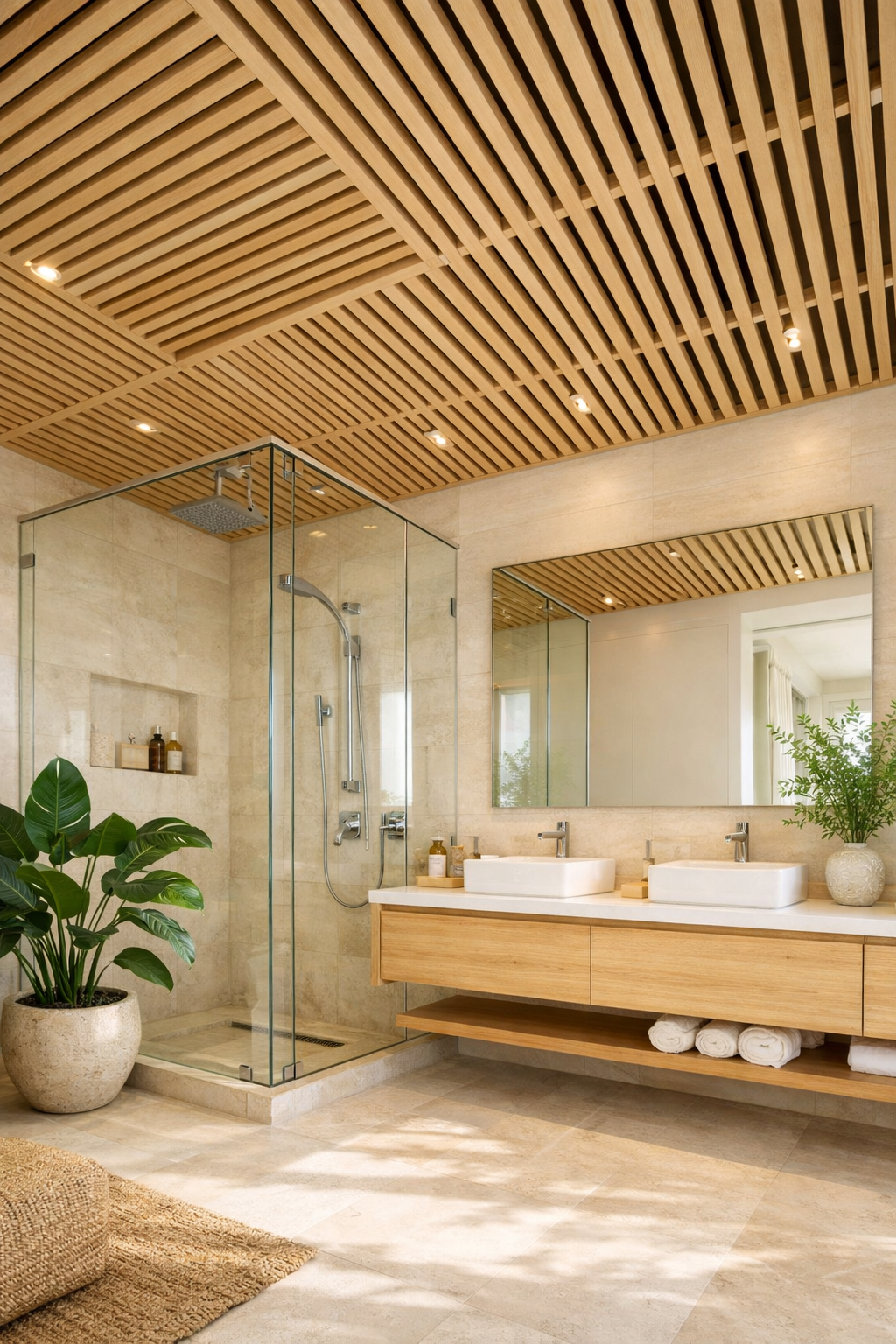
Thin oak slats spaced apart create a modern, ventilated look that allows air circulation to combat humidity buildup. The light tones reflect natural light, making bathrooms feel larger and brighter. Oak’s stability shines here, as the open design reduces trapped moisture while the wood’s hardness withstands everyday wear. This idea works particularly well above walk-in showers or freestanding tubs, where the slatted pattern adds subtle rhythm without overwhelming the space.
6. Walnut Panels for Rich, Moody Depth
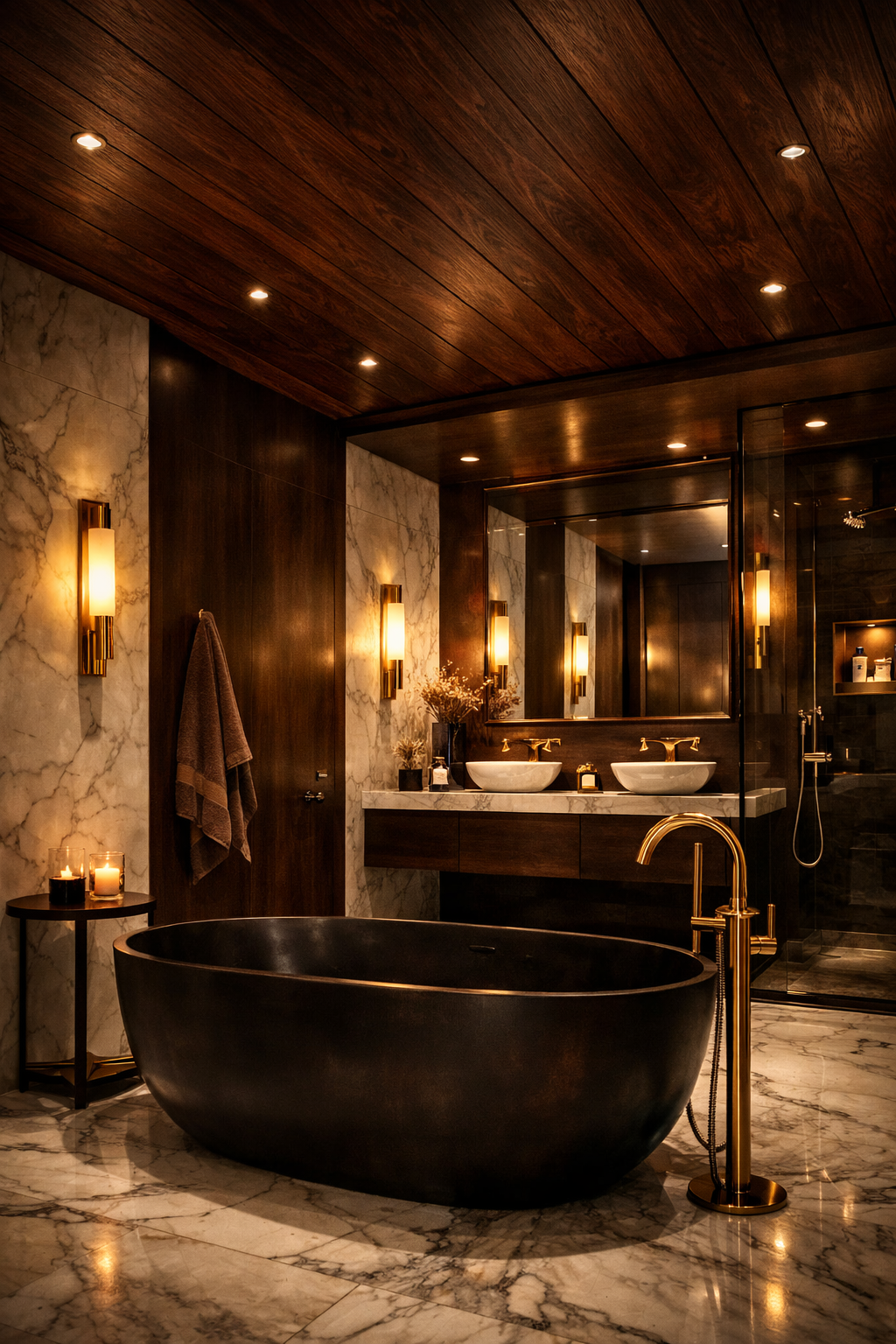
Dark walnut panels introduce dramatic warmth and luxury to a wood ceiling bathroom. The deep chocolate tones contrast beautifully with lighter walls or floors, creating an intimate, enveloping feel ideal for master suites. Walnut resists warping when properly finished, and its fine grain adds refined texture. In 2026 trends favoring moody, organic palettes, this option stands out for its ability to make the ceiling a bold yet harmonious statement.
7. Bamboo Slats for Eco-Friendly Texture
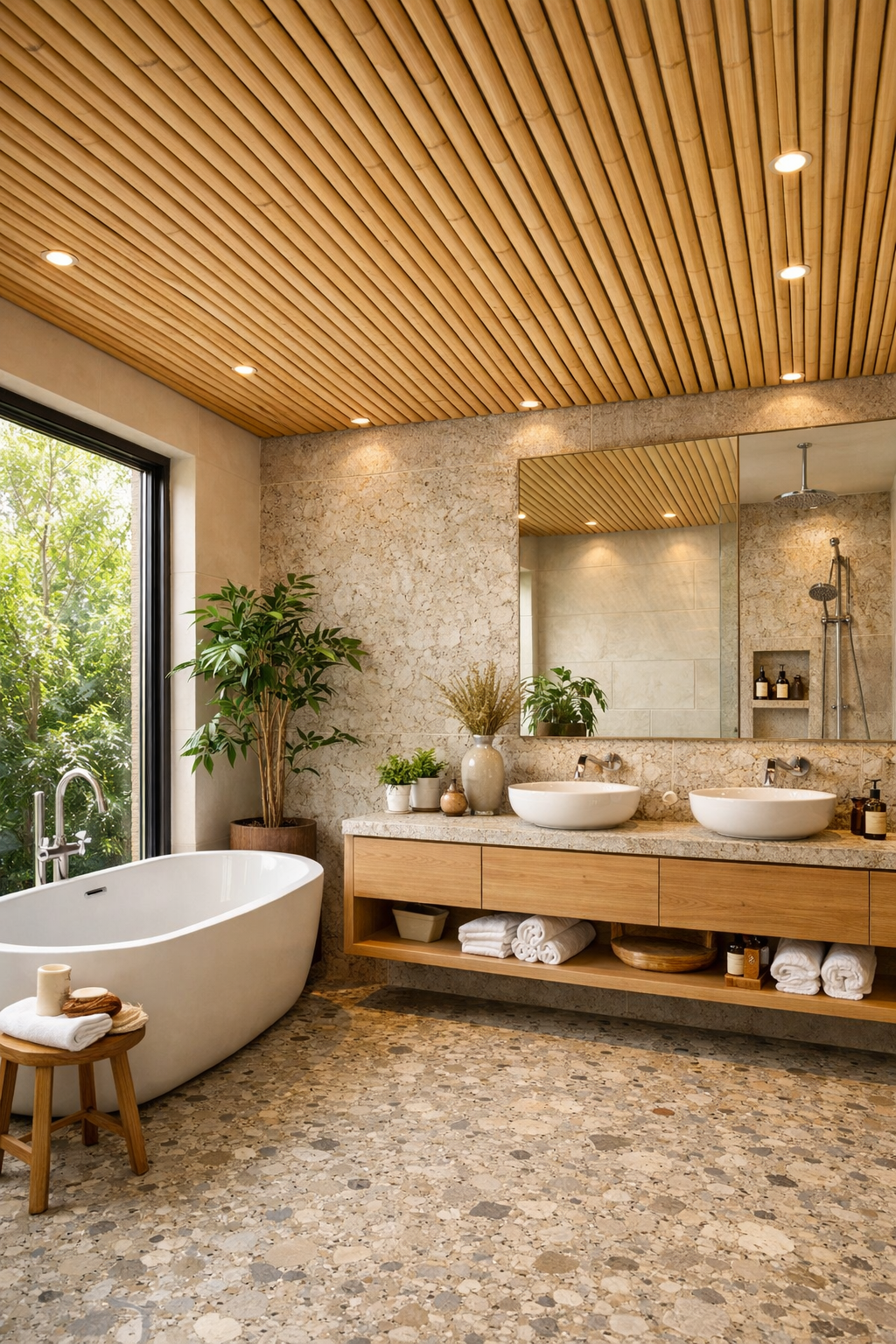
Bamboo, a rapidly renewable grass, provides a sustainable alternative with built-in moisture resistance and light, natural tones. Linear slats or woven panels add subtle texture while promoting airflow. Its lightweight nature simplifies installation, and the pale hues brighten rooms naturally. This choice aligns with growing interest in green materials, offering a fresh, zen-like quality that complements minimalist fixtures and greenery.
8. Thermally Modified Wood for Enhanced Stability
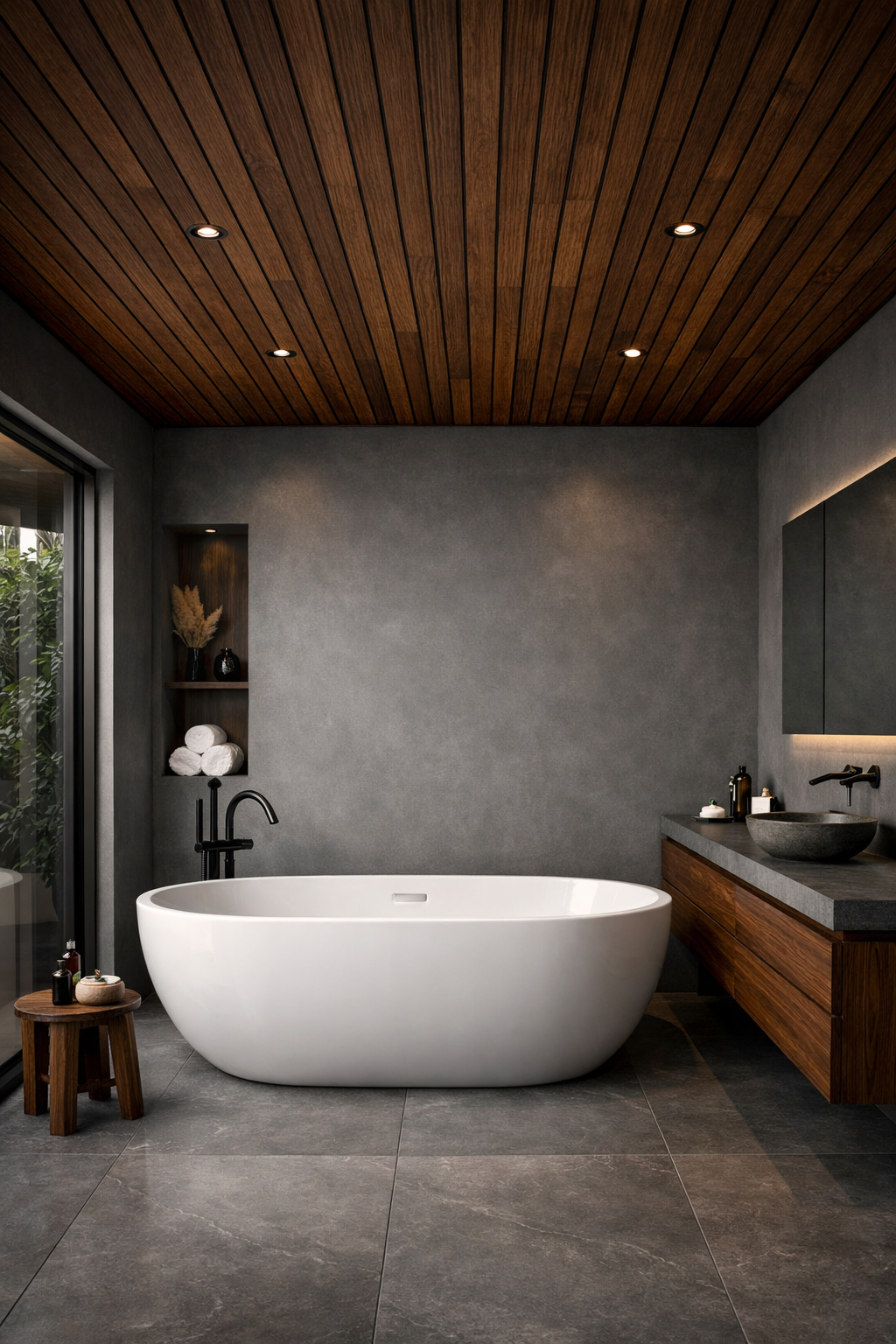
Thermally modified woods—like ash or pine treated with heat—gain superior dimensional stability and rot resistance without chemicals. The process darkens the wood slightly, resulting in rich, uniform tones that mimic exotic species. This modern technique makes softer woods viable for humid environments, providing a reliable, low-maintenance option that retains natural beauty over time.
9. Shiplap Cedar with Painted Accents
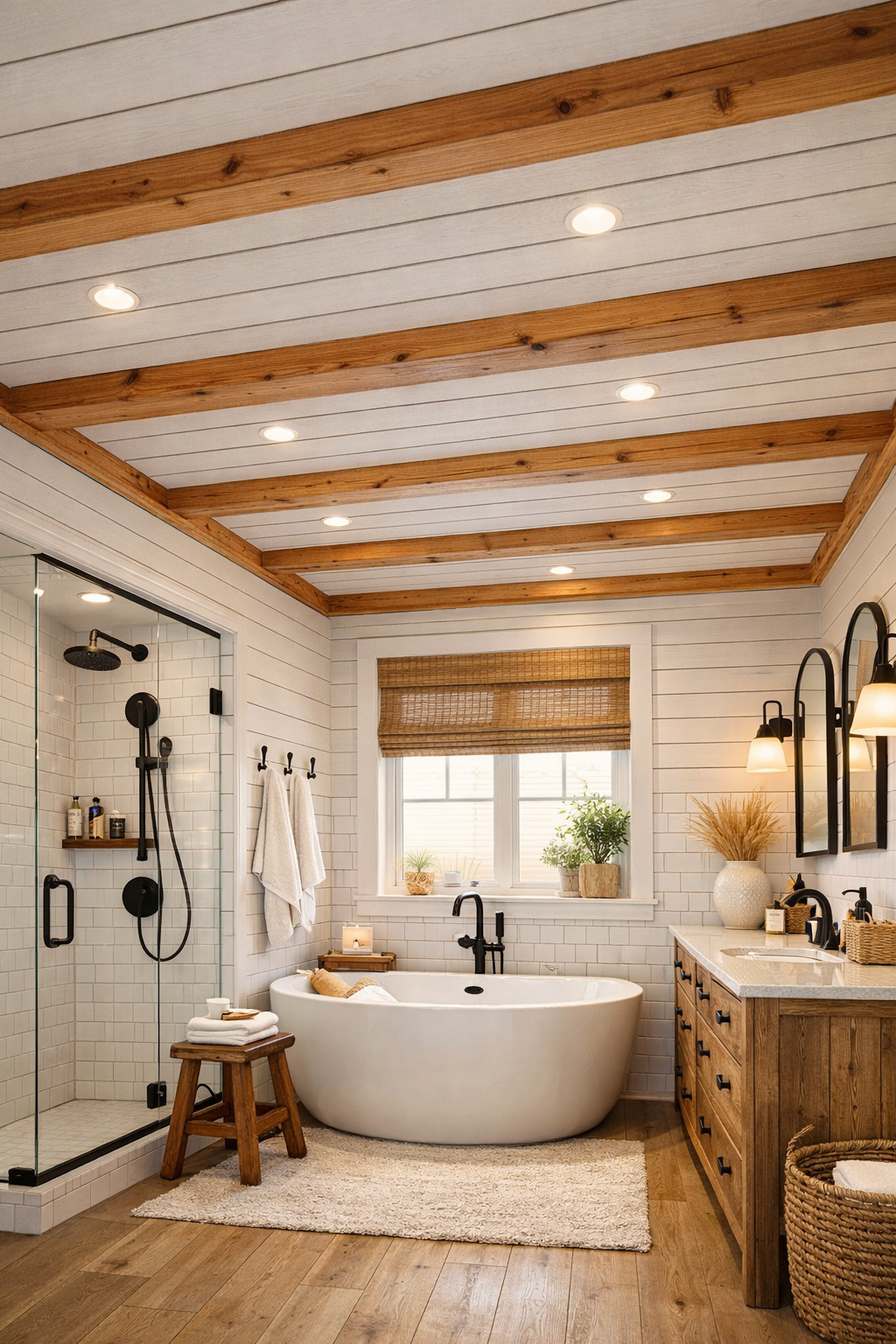
Shiplap cedar boards, painted in soft whites or grays while leaving natural edges exposed, blend rustic charm with contemporary polish. The horizontal lines elongate the space, and cedar’s properties ensure durability. This hybrid approach allows customization—keep some raw for warmth or fully coat for easier cleaning—making it versatile for various bathroom sizes and styles.
10. Mixed Wood Tones in Geometric Patterns
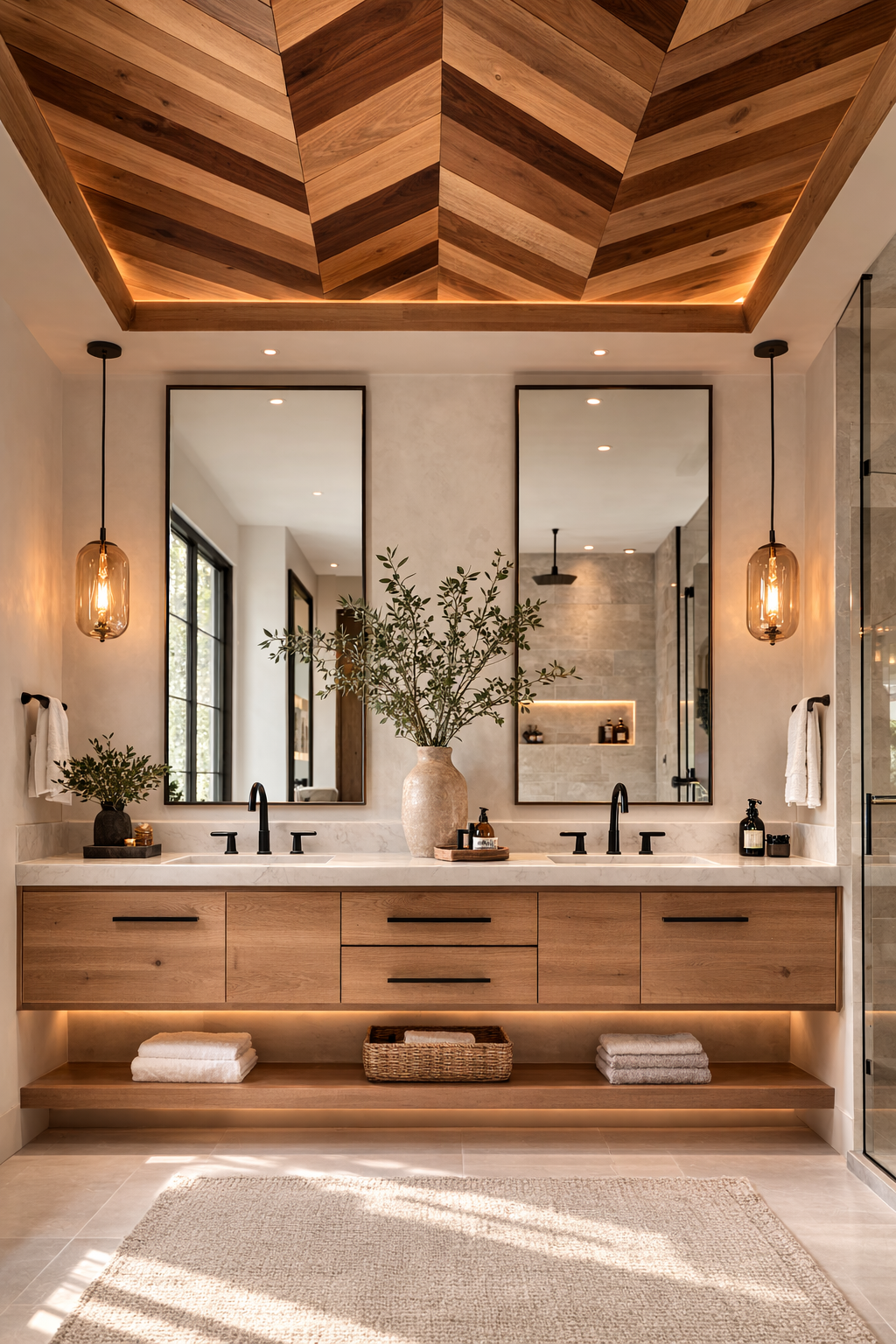
Combining light and dark wood species in geometric layouts, such as chevrons or herringbone, adds visual interest and modern artistry. Using moisture-resistant varieties like cedar and oak together creates contrast while maintaining functionality. This creative pattern draws attention upward, enhancing architectural features and pairing well with neutral palettes for balanced sophistication.
11. Faux Wood Beams for Budget-Friendly Elegance
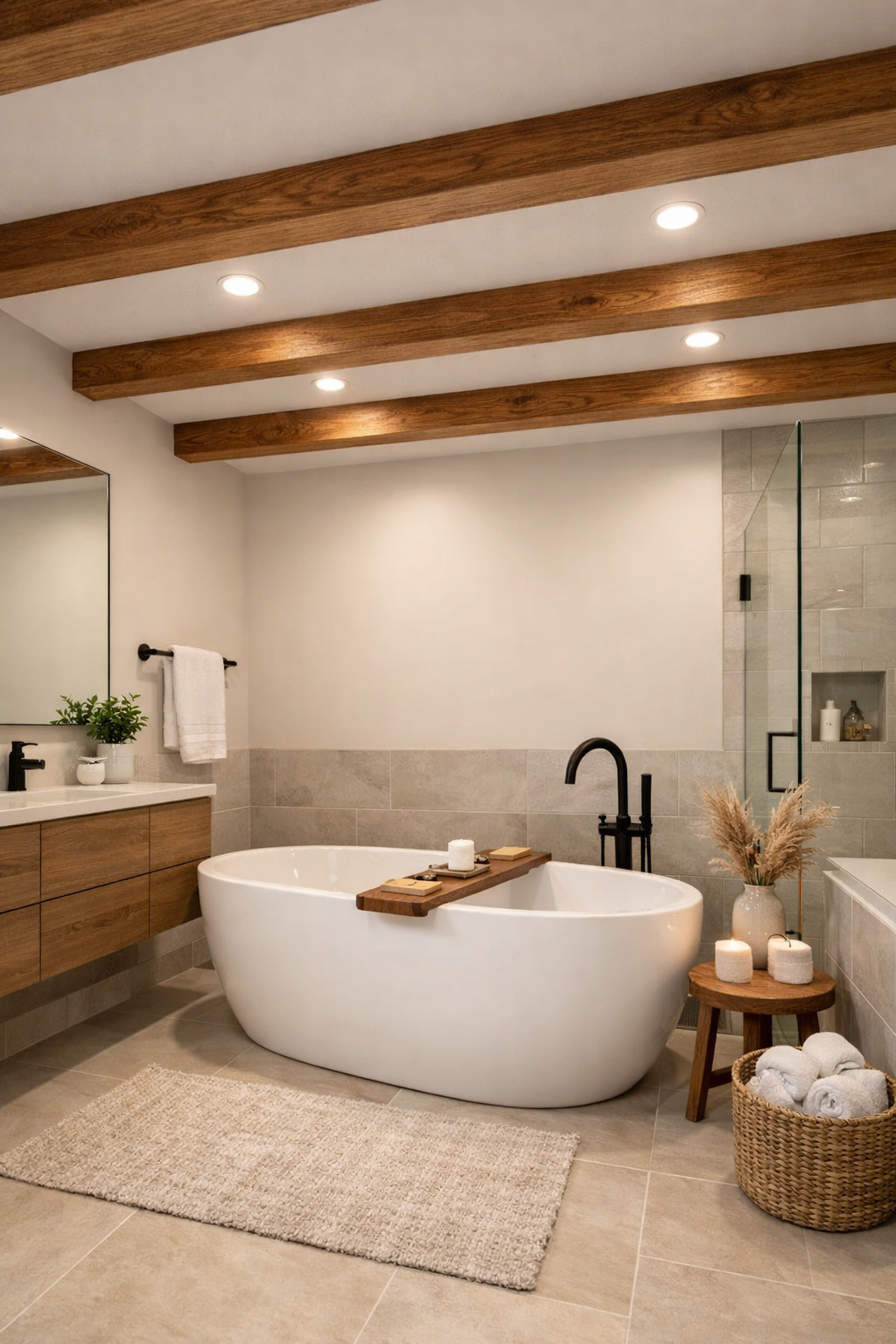
Lightweight polyurethane faux beams mimic real wood’s look and texture without the weight or full moisture concerns of solid timber. Pre-finished options in cedar or oak tones install easily over existing ceilings, offering an accessible entry into wood designs. With proper sealing, they resist humidity effectively, delivering authentic warmth at a fraction of the cost.
FAQ: Common Questions About Wood Ceiling Bathroom Designs
What makes certain woods suitable for bathroom ceilings?
Woods with natural oils like cedar and teak, or dense hardwoods like oak, resist moisture absorption best. Thermally modified or properly sealed options further enhance stability in humid conditions.
How do you prevent warping or mold on a wood ceiling in the bathroom?
Strong exhaust ventilation removes steam quickly, while high-quality marine-grade sealants create a protective barrier. Maintain indoor humidity between 40-50% and clean regularly with mild solutions.
Is wood practical for small bathrooms or powder rooms?
Yes—lighter tones like whitewashed pine or bamboo brighten compact spaces. Use slatted or spaced designs to improve airflow and avoid a heavy feel.
What maintenance does a wood ceiling bathroom require?
Dust periodically with a soft cloth, wipe gently with damp microfiber when needed, and reapply sealant every few years. Avoid harsh chemicals and address spills immediately.
Can wood ceilings work in fully tiled or wet-room bathrooms?
Absolutely, with excellent ventilation and moisture-resistant species plus protective finishes. Many designs incorporate wood only in drier zones or above tubs for balanced exposure.
Are there eco-friendly wood options for bathroom ceilings?
Bamboo grows quickly and renewably, while reclaimed or FSC-certified woods like oak minimize environmental impact while delivering natural beauty.
Conclusion
These 11 beautiful wood ceiling bathroom ideas highlight the transformative power of natural materials—bringing warmth, texture, and organic elegance to spaces that often feel clinical. From cedar’s aromatic resilience and teak’s luxurious durability to sustainable bamboo and innovative thermally modified options, each concept proves that wood can thrive in humid environments when chosen thoughtfully and maintained with care. In 2026, as designs continue favoring comfort, sustainability, and personal sanctuary, a wood ceiling offers lasting appeal that evolves gracefully with your home. By prioritizing moisture-resistant selections, proper installation, and simple upkeep, you create not just a visually stunning feature but a daily source of tranquility. Embrace the natural grain overhead, let it soften hard surfaces below, and watch your bathroom become the warm, inviting retreat you’ve always envisioned—one glance upward at a time.