
Designing a bathroom that feels calm, welcoming, and timeless is a goal shared by many homeowners. In recent years, interior trends have shifted away from overly bright or sterile spaces toward environments that promote comfort and relaxation. One design approach that continues to gain popularity is the warm neutral bathroom. By blending soft earthy tones with natural textures, this style creates a soothing atmosphere that feels both modern and enduring.
Warm neutral colors typically include shades such as cream, beige, soft taupe, sand, and light brown. These hues add warmth and depth without overwhelming the space. Unlike stark white interiors, which can sometimes feel cold, warm neutrals create a sense of balance and tranquility. This makes them ideal for bathrooms, where the goal is often to create a peaceful sanctuary.
Another reason the warm neutral palette has become a favorite in bathroom design is its flexibility. Warm neutrals pair effortlessly with a wide variety of materials, including wood, stone, marble, and brushed metals. This versatility allows homeowners to personalize their bathroom makeover while maintaining a cohesive and harmonious look.
If you are planning a renovation or simply looking to refresh your space, exploring warm neutral design ideas can help you create a bathroom that feels elegant and inviting for years to come. The following guide highlights 14 warm neutral bathroom makeover ideas for timeless serenity, each offering a unique way to incorporate warmth, texture, and balance into your bathroom design.
1. Warm Neutral Walls for a Soft Foundation

One of the most effective ways to begin a warm neutral bathroom makeover is by choosing the right wall color. Soft shades of beige, warm white, or light taupe create a gentle backdrop that instantly makes the space feel more welcoming.
These tones reflect natural light beautifully while maintaining warmth throughout the room. Instead of dominating the design, neutral walls allow other elements such as fixtures, tiles, and decor to stand out.
When paired with natural textures like wood or stone, warm neutral walls create a harmonious environment that feels calm and balanced.
2. Natural Wood Vanities for Warmth

Wood elements bring life and character to neutral spaces. A wooden vanity, particularly in oak, walnut, or teak finishes, can anchor the entire bathroom design.
The natural grain patterns of wood introduce organic texture, which complements the softness of neutral tones. This combination is often seen in spa-inspired bathrooms where comfort and natural materials play a central role.
In a warm neutral bathroom, a wooden vanity creates visual contrast while maintaining the overall sense of warmth.
3. Stone Surfaces for Organic Texture

Natural stone surfaces add depth and authenticity to bathroom interiors. Materials such as limestone, travertine, or marble with warm undertones enhance the neutral color palette while introducing subtle variations in texture.
Stone countertops, sinks, or flooring contribute to the feeling of a grounded and organic space. When combined with soft lighting and natural materials, stone surfaces can transform a bathroom into a tranquil retreat.
Many designers consider stone one of the most effective materials for achieving a warm neutral aesthetic.
4. Layered Neutral Tones for Depth

Using only one shade of neutral throughout a bathroom can make the design feel flat. A more sophisticated approach involves layering multiple warm neutral tones.
For example, light beige walls can be paired with slightly darker taupe tiles and warm cream cabinetry. These subtle variations create visual interest while maintaining harmony within the palette.
Layering tones helps the space feel rich and thoughtfully designed without introducing bold or distracting colors.
5. Textured Tiles for Subtle Character

Texture plays an important role in modern bathroom design. In a warm neutral bathroom, textured tiles add dimension while preserving the calm aesthetic.
Tiles with gentle patterns, matte finishes, or natural stone textures can enhance walls or shower areas. When light interacts with these surfaces, it creates soft shadows that add depth to the design.
This technique is particularly effective in minimalist bathrooms where texture replaces bold color as the primary visual feature.
6. Freestanding Bathtub as a Relaxing Centerpiece

A freestanding bathtub often becomes the focal point of a serene bathroom design. When placed within a warm neutral setting, it enhances the spa-like atmosphere of the space.
Neutral walls and natural flooring help highlight the elegance of the bathtub while maintaining a peaceful environment. Large windows or soft lighting can further emphasize the calming qualities of the room.
This arrangement creates a luxurious yet understated bathroom sanctuary.
7. Soft Lighting to Enhance Warm Tones
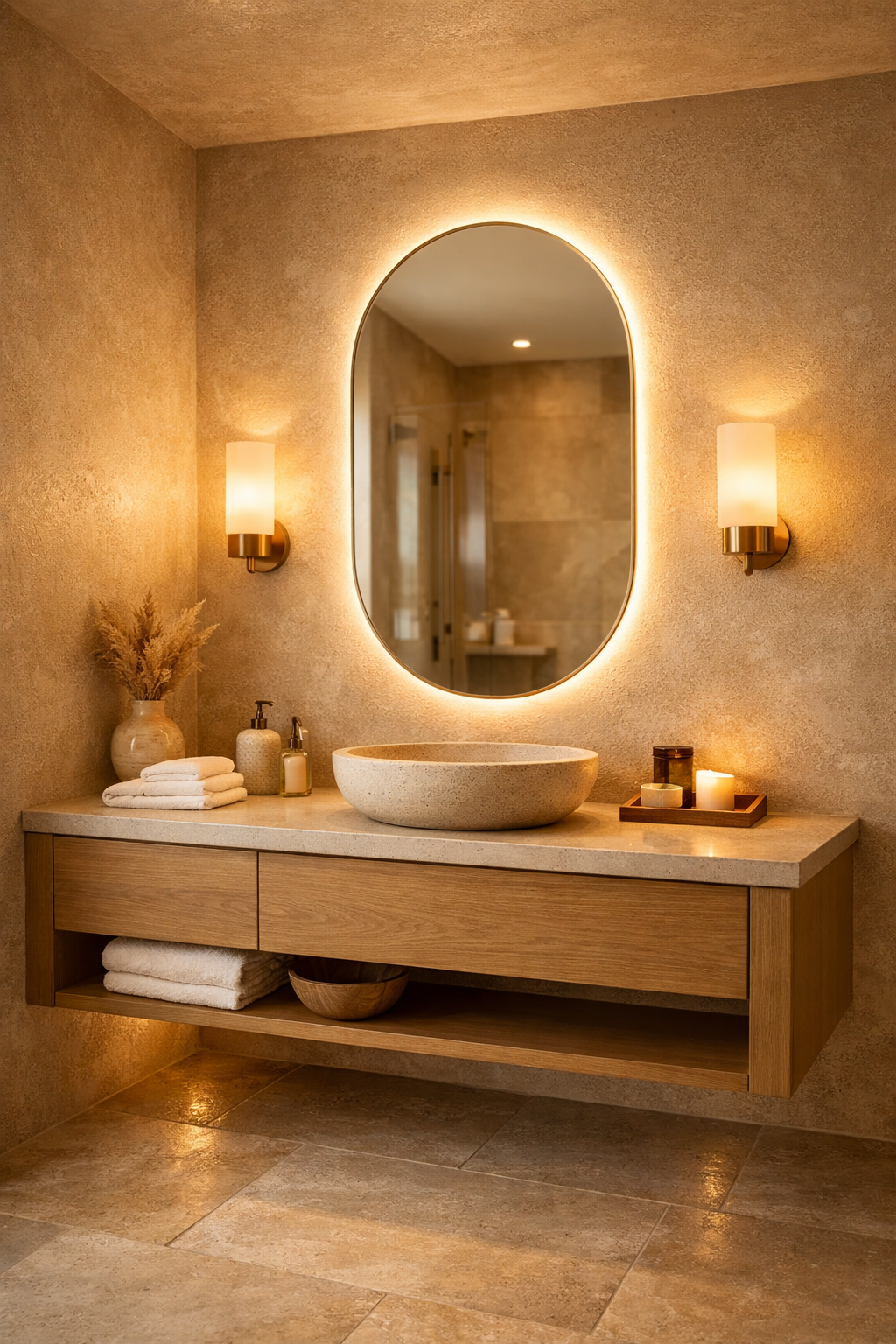
Lighting significantly influences how colors appear in a space. In a warm neutral bathroom, soft lighting helps bring out the richness of beige, cream, and taupe tones.
Wall sconces, pendant lights, and illuminated mirrors with warm temperature bulbs create a gentle glow that enhances the cozy atmosphere. Harsh lighting is typically avoided because it can make neutral colors appear flat.
Instead, layered lighting adds depth and warmth to the overall design.
8. Warm Neutral Flooring for Cohesion

Flooring plays a major role in tying together the bathroom’s design. Warm neutral flooring options such as stone tiles, porcelain tiles with natural textures, or wood-look surfaces can unify the entire space.
These materials create continuity between the walls, vanity, and decorative elements. Neutral flooring also allows other design features to stand out while maintaining visual balance.
The result is a cohesive and comfortable bathroom environment.
9. Minimalist Design for a Calm Atmosphere

Minimalism pairs naturally with warm neutral color schemes. By focusing on simplicity and clean lines, minimalist design allows neutral tones to shine.
Floating vanities, frameless mirrors, and sleek fixtures contribute to a clutter-free aesthetic. The simplicity of the layout reinforces the calm and tranquil atmosphere that warm neutral palettes aim to achieve.
This style works particularly well in smaller bathrooms where visual simplicity helps the room feel more spacious.
10. Natural Decor Elements for Authentic Warmth

Decorative elements inspired by nature can enhance the feeling of serenity in a bathroom. Woven baskets, linen towels, wooden stools, and ceramic containers complement warm neutral tones beautifully.
Indoor plants are also a popular addition. Their greenery adds freshness while maintaining harmony with the natural palette.
These subtle decorative touches help personalize the bathroom without disrupting the overall calm aesthetic.
11. Neutral Marble Accents for Elegance

Marble surfaces with warm undertones can elevate a neutral bathroom design. Marble countertops, backsplashes, or shower walls introduce a refined texture that feels luxurious yet understated.
The natural veining patterns found in marble provide visual movement without overwhelming the space. When combined with warm lighting and neutral tones, marble accents create a sophisticated bathroom environment.
This approach blends timeless elegance with modern serenity.
12. Neutral and Metal Accents for Subtle Contrast

Metal finishes add a refined touch to neutral bathroom interiors. Brushed brass, champagne gold, or warm bronze fixtures pair particularly well with warm neutral tones.
Faucets, mirror frames, and cabinet handles in these finishes introduce a hint of contrast while maintaining harmony within the palette.
These metallic accents enhance the design without distracting from the calming atmosphere of the bathroom.
13. Glass Elements for Lightness and Openness

Glass features such as frameless shower enclosures and large mirrors help maintain openness in neutral bathroom spaces. Glass reflects light and prevents the room from feeling visually heavy.
When combined with warm neutral tones, glass elements contribute to a bright and airy atmosphere. This design choice is especially helpful in smaller bathrooms where openness is essential.
The result is a bathroom that feels both spacious and inviting.
14. Balanced Design Through Thoughtful Layout

A successful warm neutral bathroom makeover is not only about color and materials but also about thoughtful layout and balance. Carefully placing fixtures, storage, and lighting ensures that the space remains functional while preserving its calming aesthetic.
Designers often emphasize symmetry and simplicity when arranging neutral bathroom elements. This balance helps maintain visual harmony and reinforces the sense of tranquility that defines warm neutral interiors.
Frequently Asked Questions About Warm Neutral Bathrooms
What is a warm neutral bathroom?
A warm neutral bathroom uses soft, earthy tones such as beige, cream, taupe, and warm gray to create a relaxing and inviting environment. These colors add warmth and depth while maintaining a balanced and timeless appearance.
Why are warm neutral bathrooms popular?
Warm neutral bathrooms are popular because they create calm and comfortable spaces that feel timeless. Their versatility allows them to complement many materials and design styles, making them suitable for both modern and classic interiors.
How do I make a bathroom feel warm and inviting?
To create a warm bathroom, designers often use neutral color palettes, natural materials such as wood or stone, soft lighting, and textured surfaces. These elements work together to produce a comfortable and relaxing atmosphere.
What colors work best in a warm neutral bathroom?
Colors such as beige, cream, taupe, sand, and soft brown work well in warm neutral bathroom designs. These tones can be layered together to create depth while maintaining a cohesive palette.
Can warm neutral bathrooms work in small spaces?
Yes, warm neutral colors can make small bathrooms feel larger and more inviting. Their ability to reflect light while maintaining warmth helps create an open and comfortable atmosphere even in compact spaces.
Conclusion
Creating a bathroom that feels both stylish and calming requires thoughtful choices in color, materials, lighting, and layout. The warm neutral bathroom approach offers a perfect solution by combining natural warmth with timeless elegance.
The fourteen makeover ideas explored in this guide demonstrate how neutral tones can transform a bathroom into a peaceful sanctuary. From layered color palettes and natural stone textures to minimalist design and soft lighting, each concept highlights a different way to bring warmth and serenity into the space.
As interior design trends continue to prioritize comfort, wellness, and natural aesthetics, warm neutral bathrooms remain one of the most enduring and versatile choices. By thoughtfully combining textures, materials, and gentle color variations, homeowners can create bathrooms that feel welcoming, sophisticated, and beautifully balanced for years to come.