There is something undeniably comforting about stepping into a space that feels familiar, warm, and full of character. In a world where ultra-minimalist interiors often dominate design trends, many homeowners are rediscovering the charm of retro bathroom ideas. These spaces celebrate color, craftsmanship, and personality in ways that feel both nostalgic and surprisingly fresh.
If you are considering a bathroom renovation and want something that stands out without feeling trendy or temporary, a retro-inspired design may be the perfect solution. Retro bathrooms draw inspiration from the 1920s through the 1970s, blending iconic elements like checkerboard floors, pastel fixtures, bold tiles, and vintage hardware with modern functionality. When done thoughtfully, this style creates a timeless and inviting atmosphere that feels curated rather than outdated.
In this guide, you will explore ten of the best retro bathroom ideas for a timeless and nostalgic makeover, along with practical insights to help you adapt them to modern living.
1. Embrace Classic Black and White Tile Patterns
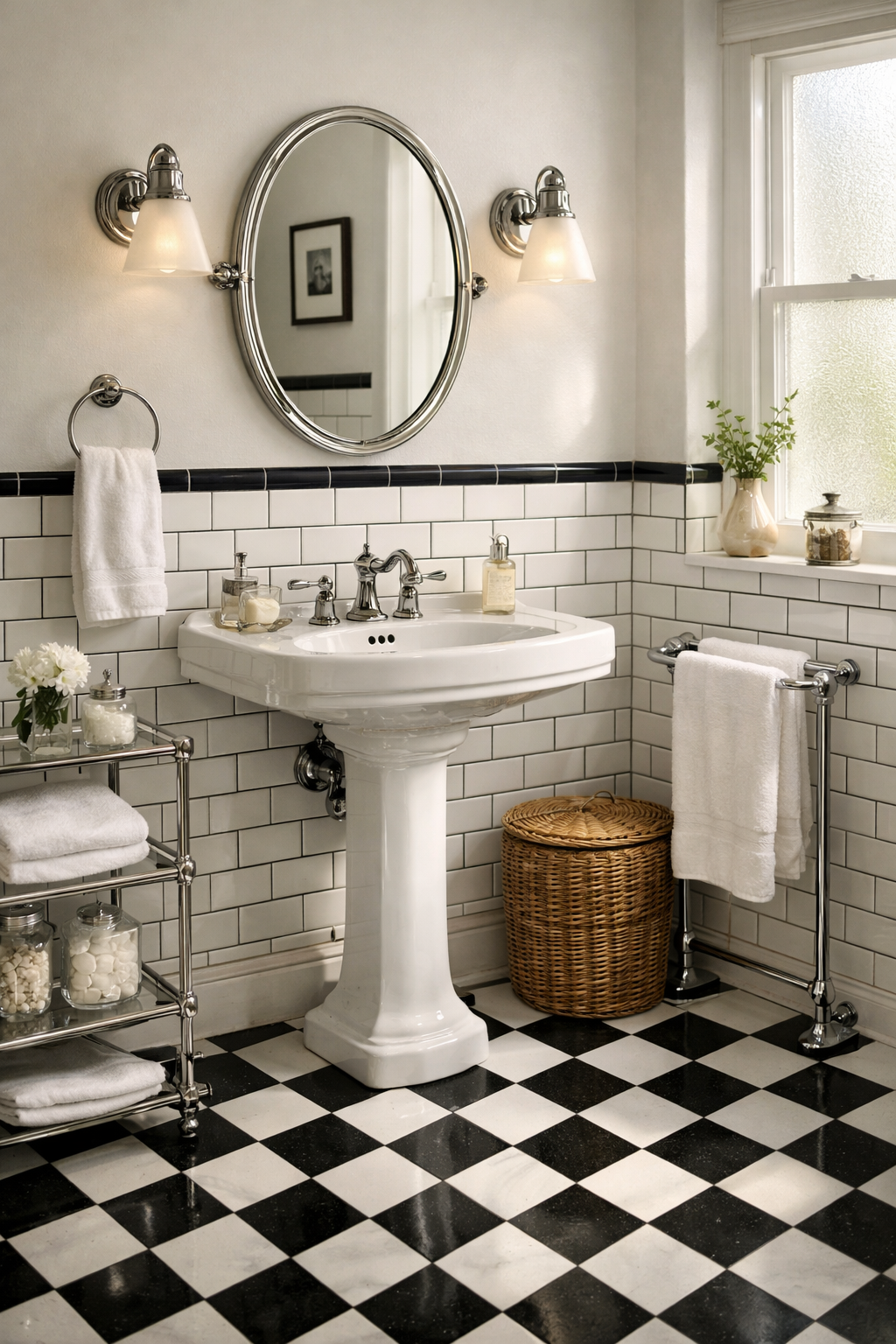
One of the most enduring retro bathroom ideas is the black and white tile combination. Popular throughout the 1920s and 1950s, this high-contrast look remains a design staple because of its simplicity and elegance.
A checkerboard floor instantly sets a nostalgic tone while remaining versatile enough to pair with various wall treatments. Subway tiles in white with dark grout lines add subtle visual interest without overwhelming the space. The beauty of this combination lies in its balance. It feels vintage yet refined, dramatic yet clean.
To keep the look from feeling overly stark, consider softening the contrast with brushed nickel fixtures or a warm-toned vanity. The result is a bathroom that feels classic and grounded rather than theme-driven.
2. Introduce Pastel Fixtures for Authentic Charm
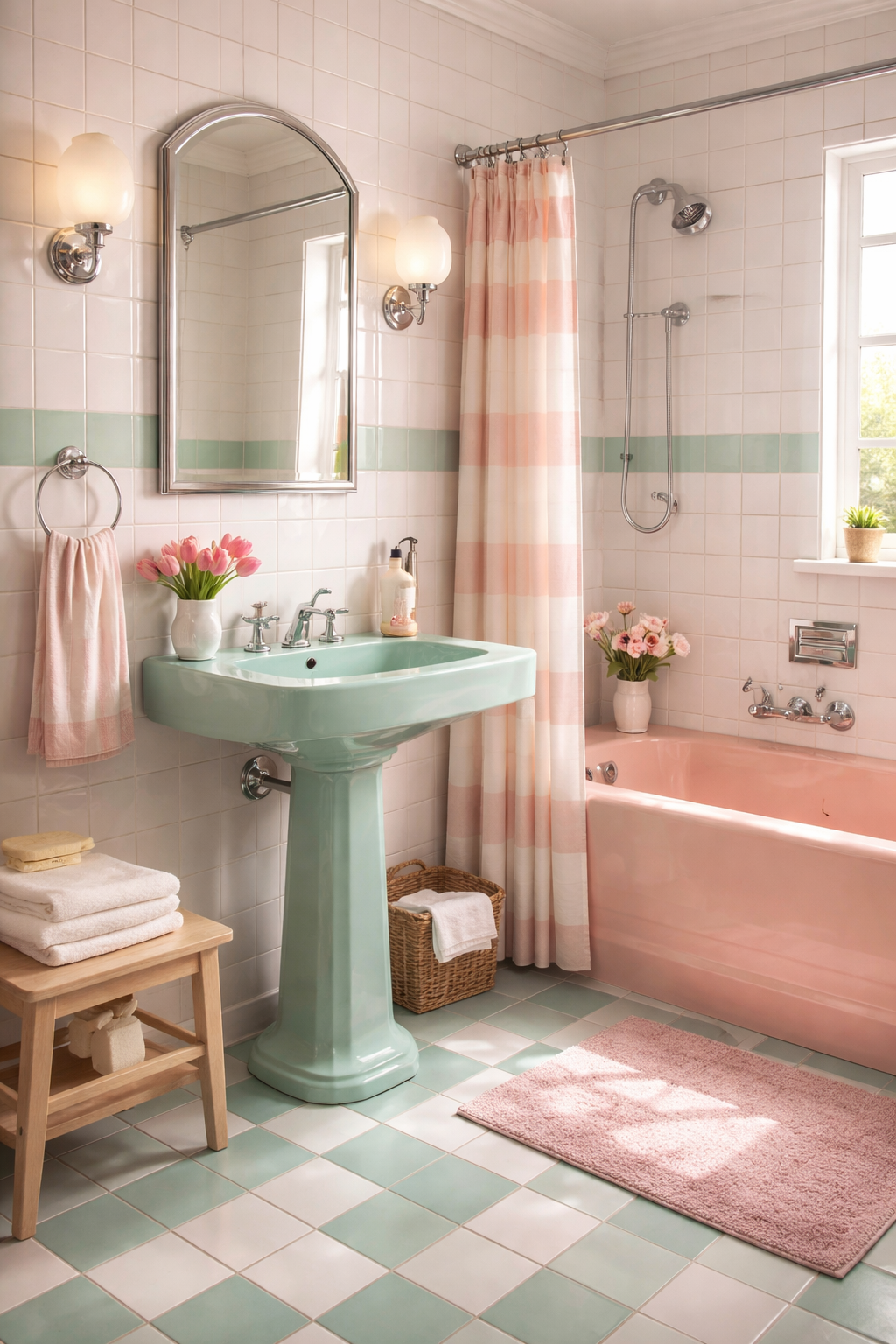
If you want a truly nostalgic transformation, pastel-colored fixtures are among the most recognizable retro bathroom ideas. Soft shades of mint green, powder blue, blush pink, and butter yellow were widely used in mid-century homes.
Today, many manufacturers offer modern tubs and sinks in subtle pastel tones, making it easier to achieve this look without sacrificing efficiency or water-saving features. A pastel sink paired with neutral walls can create a gentle focal point. Alternatively, you might opt for a white tub and introduce color through tile or accessories for a softer interpretation.
The key is balance. Too much pastel can overwhelm the room, while a carefully chosen statement piece can evoke history in a tasteful and contemporary way.
3. Install a Clawfoot or Pedestal Tub
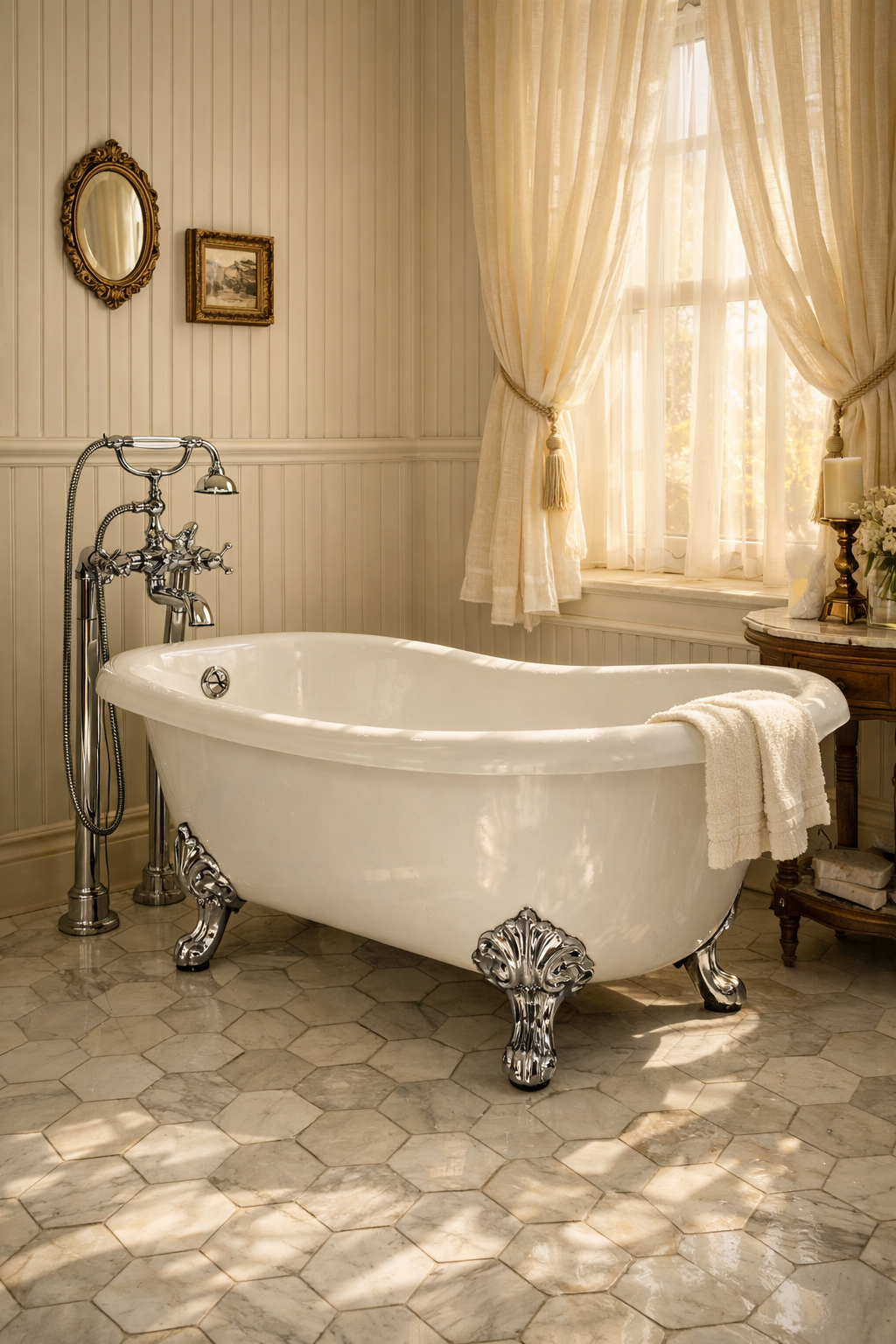
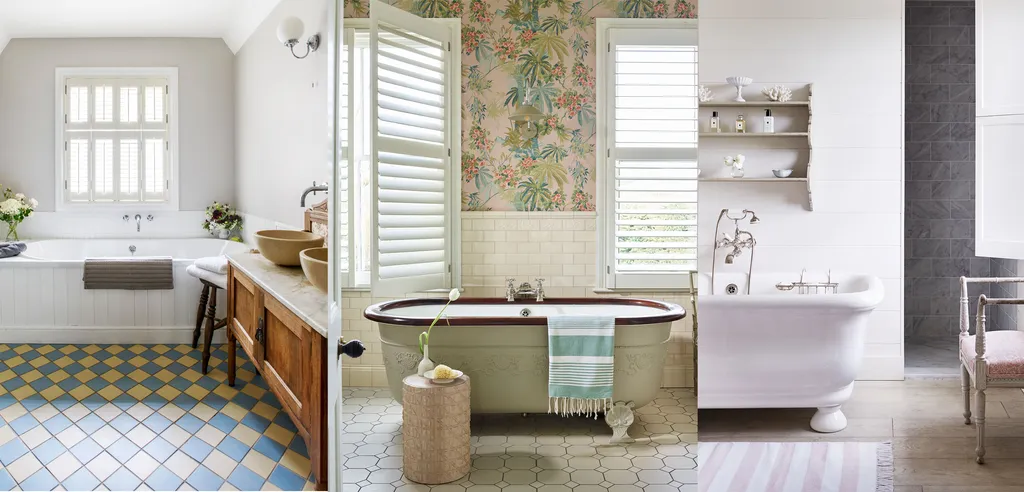
Few features define retro bathroom ideas more clearly than a freestanding clawfoot tub. These tubs were popular in early 20th-century homes and remain iconic for their sculptural elegance.
A clawfoot tub instantly adds character and becomes the visual centerpiece of the bathroom. It pairs beautifully with patterned tile floors or beadboard wall paneling. For smaller spaces, a pedestal tub or a vintage-style soaking tub can provide a similar nostalgic feel without dominating the room.
Modern plumbing upgrades allow these traditional designs to function as efficiently as contemporary tubs. This combination of old-world aesthetics and current comfort is what makes retro design so appealing.
4. Use Patterned Floor Tiles for Personality
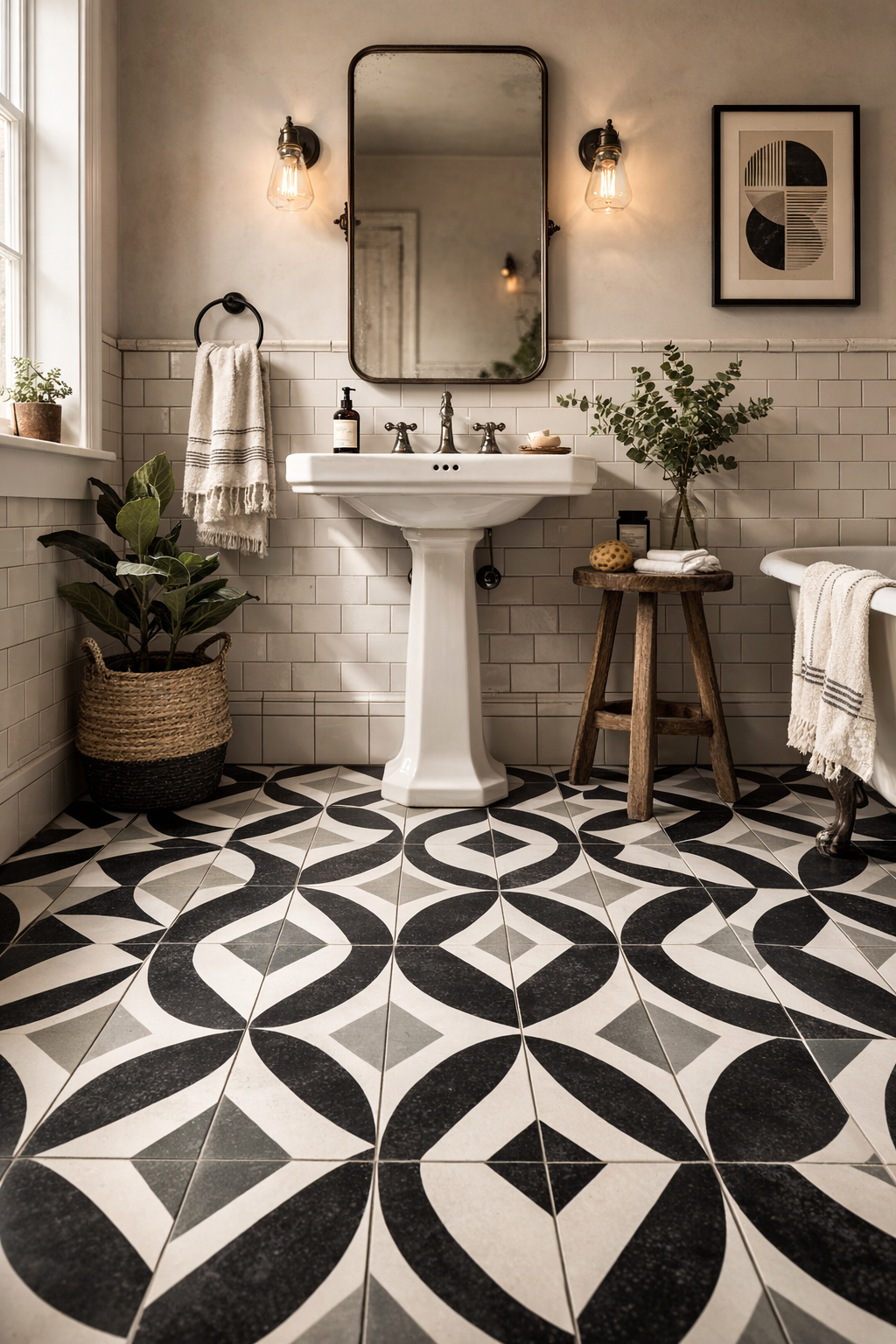
Patterned tiles are another hallmark of retro bathroom ideas. From geometric motifs of the 1920s to the bold prints of the 1960s, floor patterns bring energy and movement into the space.
Rather than covering every surface with pattern, consider using it strategically. A detailed floor tile paired with solid-colored walls allows the design to shine without overwhelming the eye. Alternatively, subtle floral or starburst patterns can introduce character while maintaining visual harmony.
High-quality porcelain tiles today can replicate vintage styles while offering better durability and water resistance. This means you can enjoy nostalgic aesthetics without worrying about long-term maintenance challenges.
5. Add Beadboard or Wainscoting for Texture
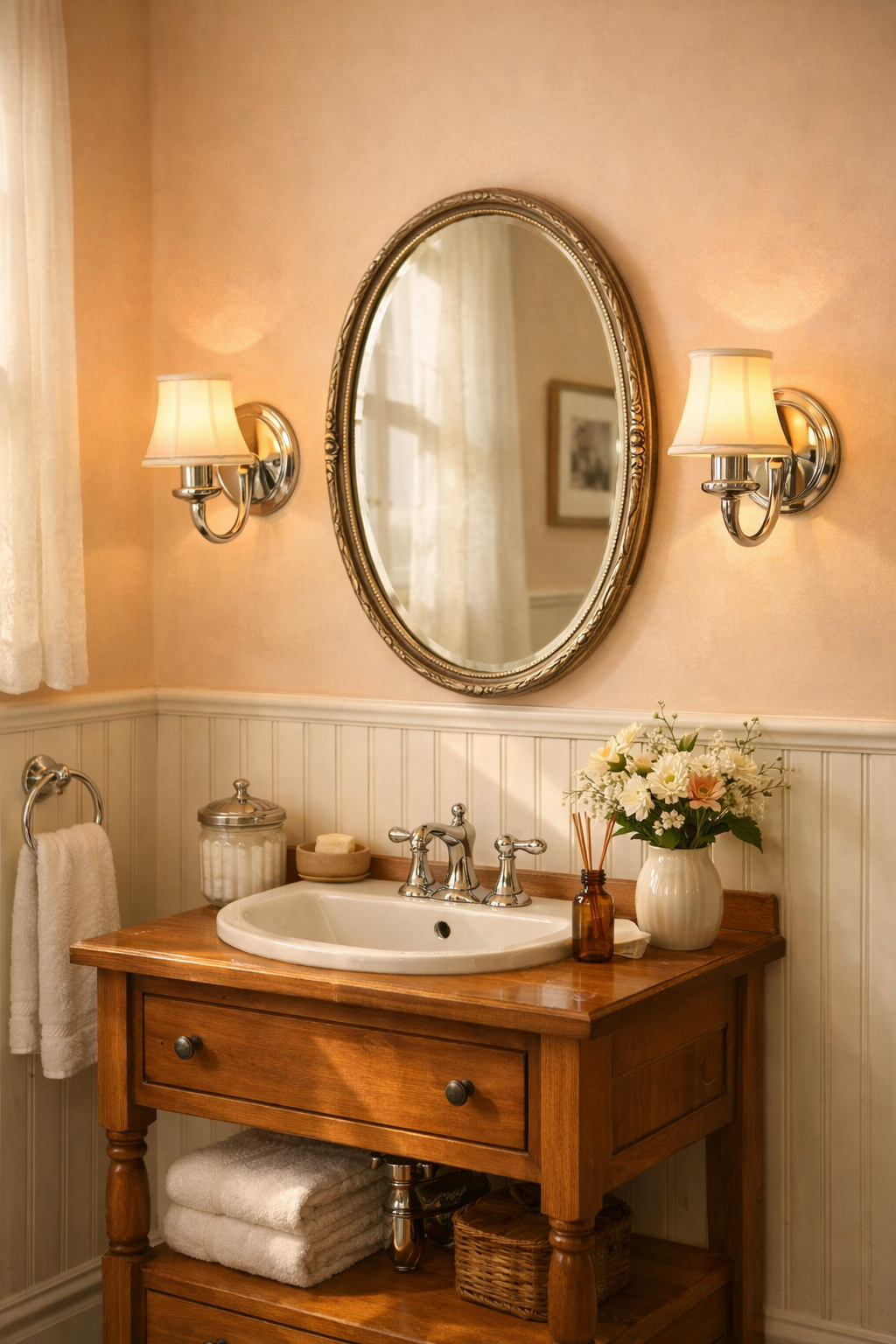
Wall paneling was a common feature in earlier homes, and incorporating beadboard or wainscoting remains one of the most practical retro bathroom ideas. It introduces depth and texture while protecting lower wall sections from moisture.
Painting beadboard in soft white or pastel tones enhances the vintage look while keeping the room bright. This approach works especially well in smaller bathrooms where full-wall tile may feel too heavy.
When paired with traditional hardware and classic lighting fixtures, beadboard creates a cohesive environment that feels carefully designed rather than artificially themed.
6. Choose Vintage-Inspired Hardware and Fixtures
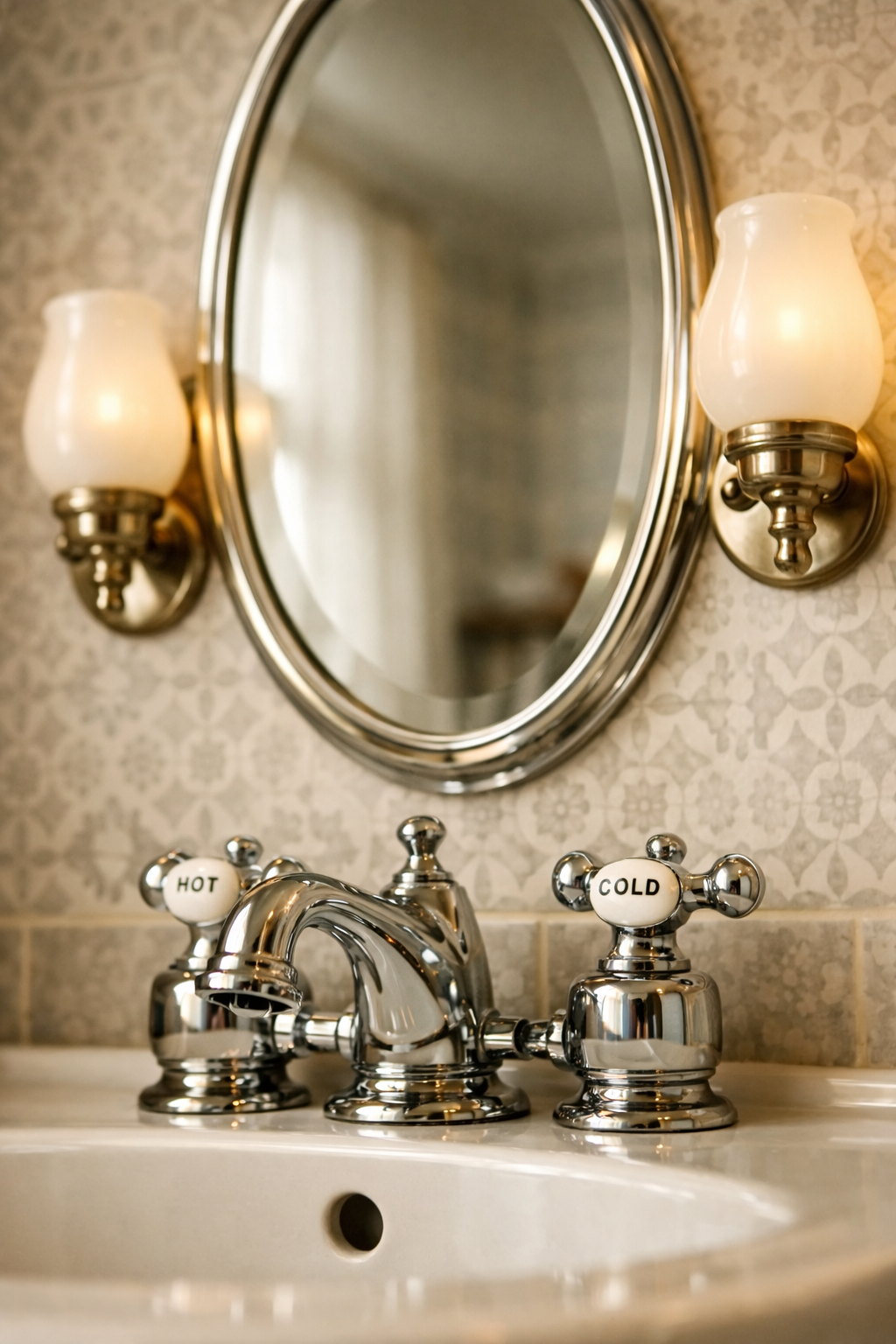
Sometimes the smallest details make the biggest difference. Swapping modern handles, faucets, and lighting for vintage-inspired alternatives can instantly shift the overall mood of your bathroom.
Look for cross-handle faucets, porcelain knobs, or polished chrome finishes reminiscent of mid-century design. Wall-mounted sconces with frosted glass shades can add softness and authenticity. These subtle upgrades are among the easiest retro bathroom ideas to implement because they do not require major structural changes.
Even a traditional oval mirror with a thin metal frame can transform the atmosphere and connect all the elements together.
7. Incorporate Bold Wallpaper Accents
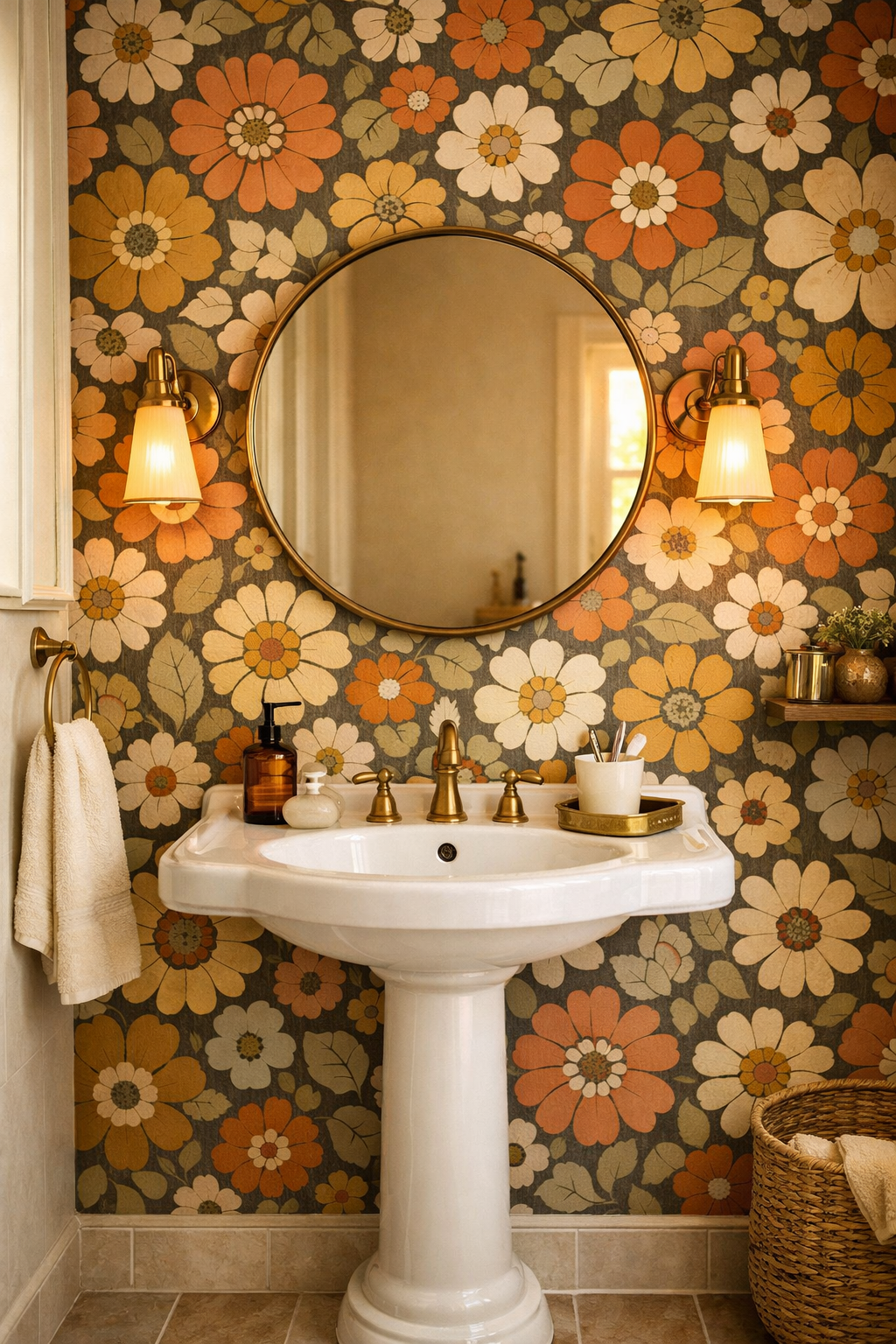
Wallpaper experienced a surge in popularity during the mid-20th century, and it remains a powerful tool in retro bathroom design. Florals, abstract geometrics, and playful prints can inject personality into even the simplest space.
In modern applications, moisture-resistant wallpaper options make it safer to use in bathrooms than in the past. To maintain balance, consider using wallpaper on one feature wall while keeping other surfaces neutral. This prevents visual overload and keeps the room feeling fresh.
When chosen thoughtfully, wallpaper can serve as the defining element that ties together multiple retro bathroom ideas into a cohesive narrative.
8. Mix Retro Lighting with Modern Efficiency
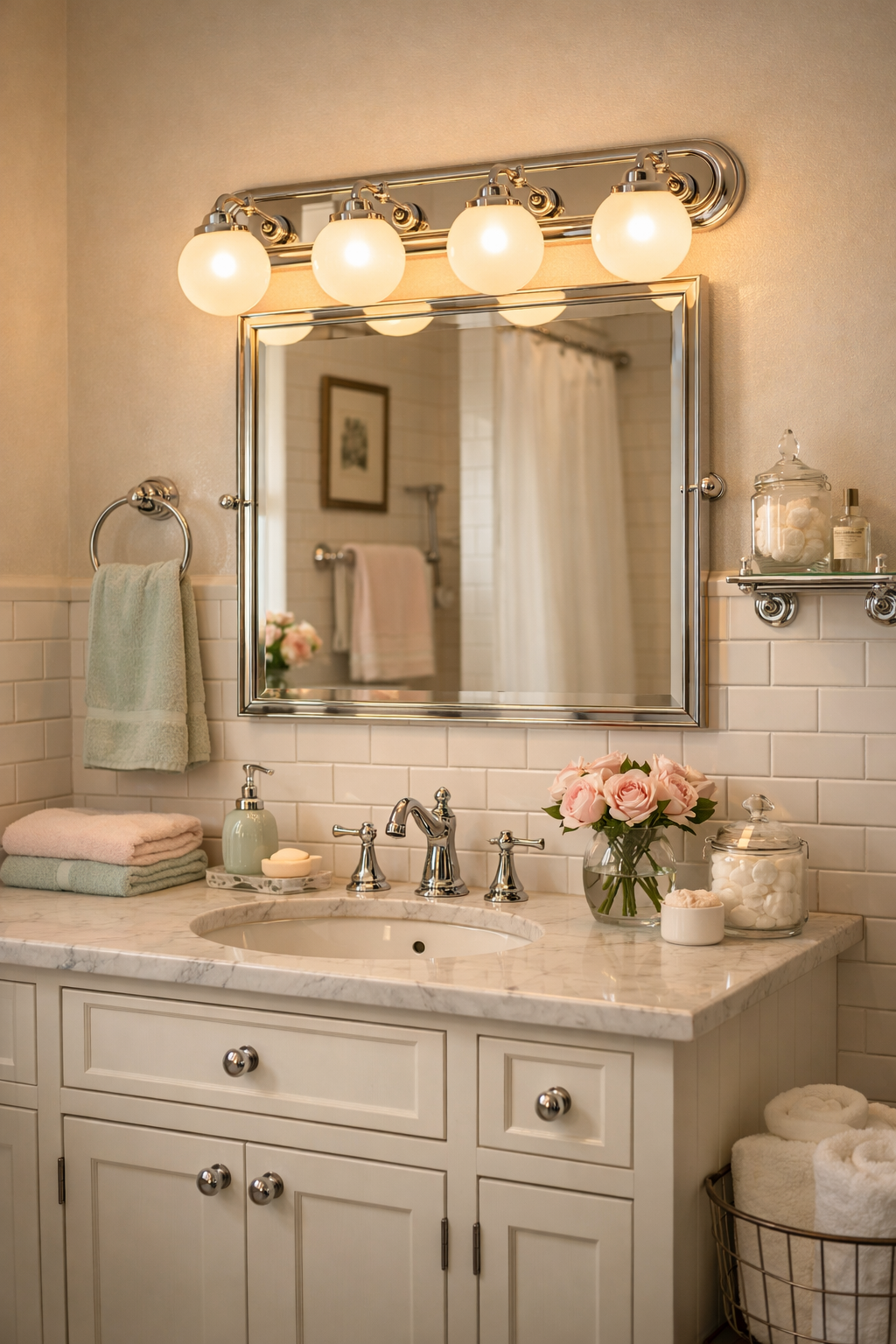
Lighting plays a crucial role in setting the mood. Globe lights, brass sconces, and milk glass shades were common in earlier decades and remain popular in vintage-inspired interiors.
To align with today’s energy standards, choose LED-compatible fixtures that replicate retro silhouettes. Warm white bulbs can enhance the nostalgic atmosphere and soften reflective surfaces like tile and mirrors.
By blending traditional design with modern efficiency, you ensure the bathroom feels timeless rather than outdated.
9. Display Open Shelving with Vintage Accessories
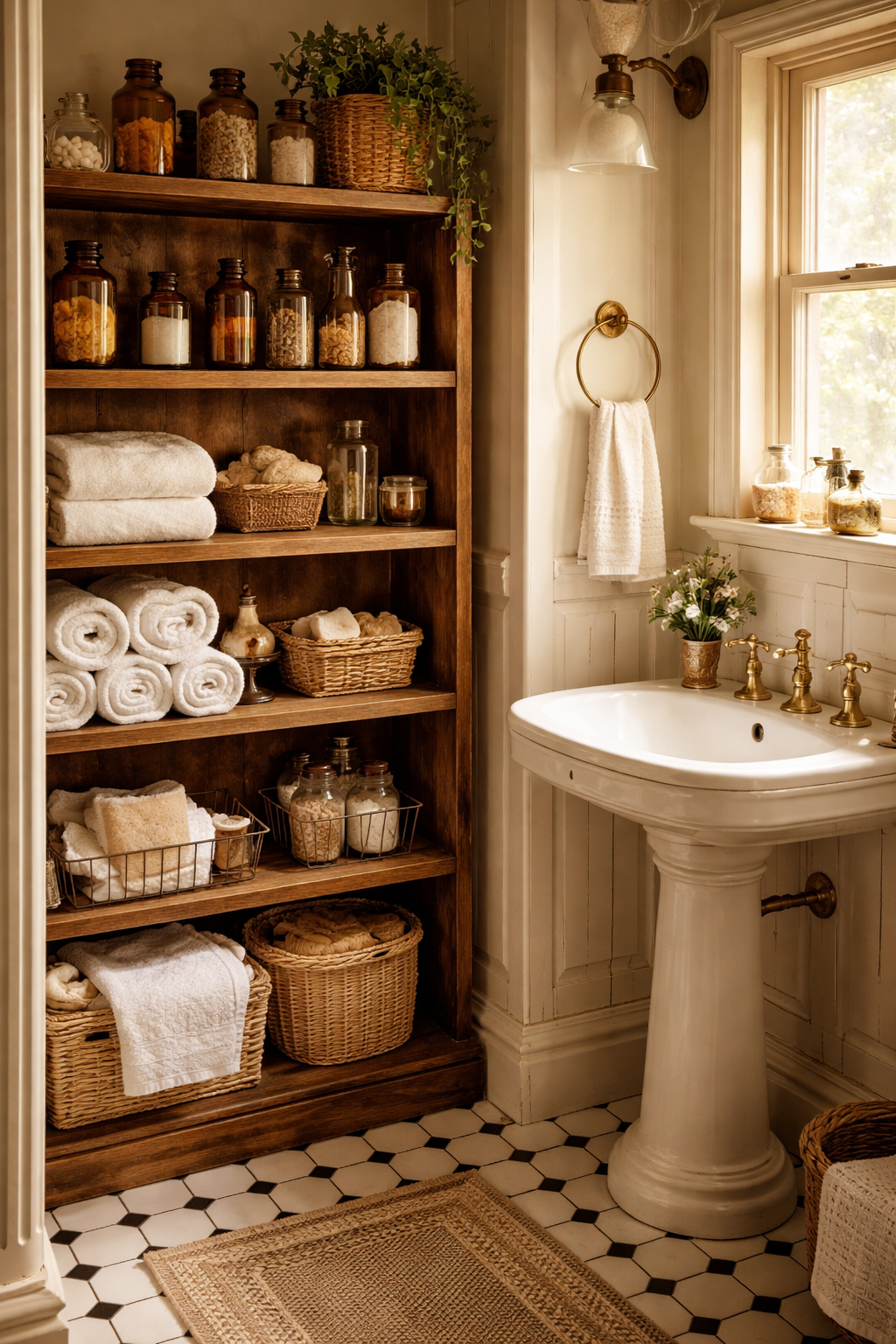
Open shelving offers both function and charm. Wooden or metal shelves styled with vintage apothecary jars, rolled towels, and decorative soap dishes can evoke a sense of history without overwhelming the room.
Retro bathroom ideas often emphasize personality through accessories. A small antique stool, a framed vintage print, or classic glass storage containers can subtly enhance authenticity. However, restraint is important. Too many decorative pieces can create clutter, which detracts from the clean and inviting feel most homeowners want.
The goal is to suggest nostalgia rather than replicate a museum display.
10. Blend Retro Colors with Contemporary Layouts
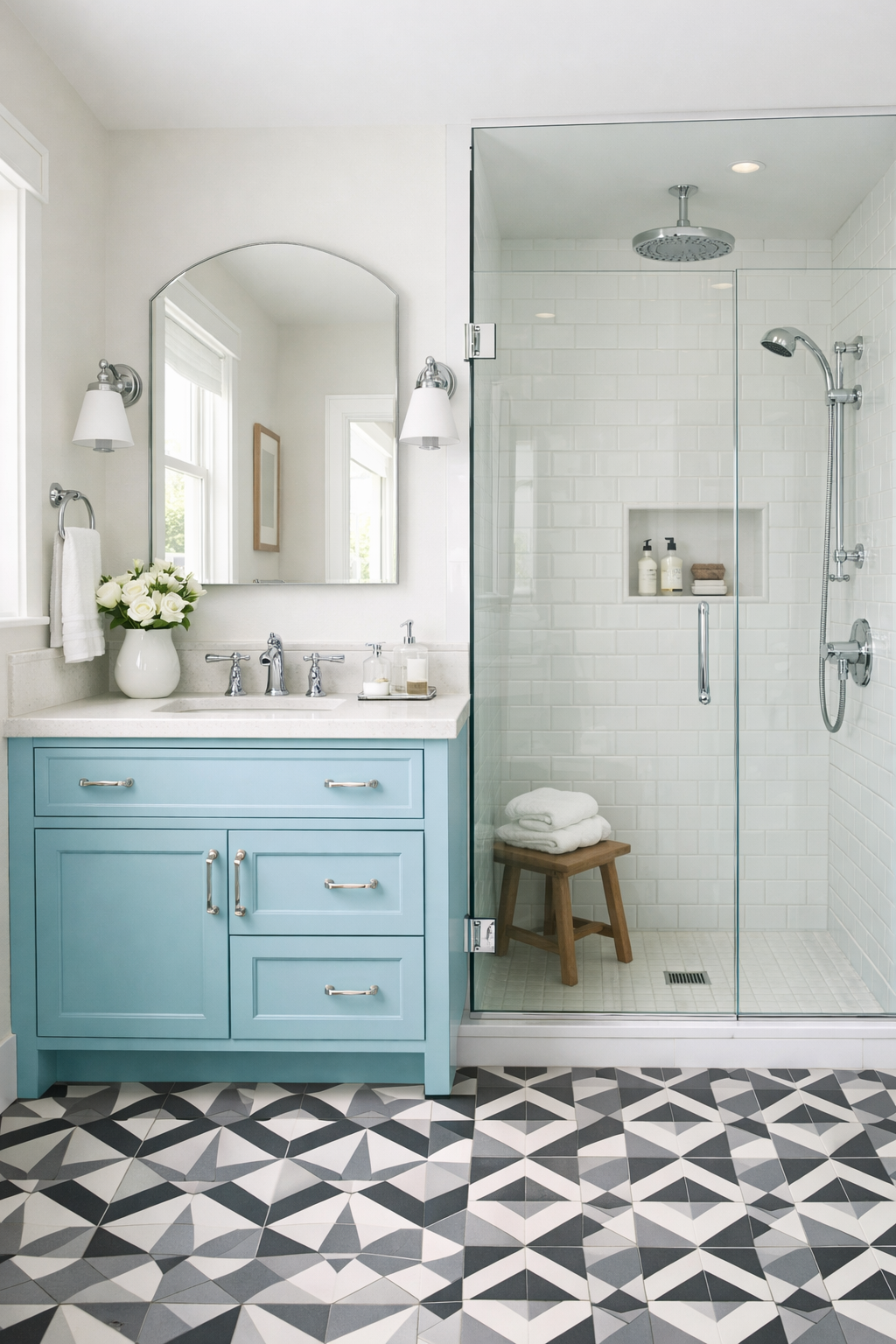
Perhaps the most successful retro bathroom ideas combine vintage aesthetics with modern layouts. Instead of copying a historical design exactly, adapt the colors, textures, and shapes into a layout that meets current lifestyle needs.
For example, you might incorporate mid-century color schemes with a walk-in shower that includes frameless glass. Or you may use vintage tile patterns in a spacious double-vanity configuration. This approach respects tradition while embracing functionality.
Retro design works best when it feels intentional and personal rather than overly literal. By focusing on comfort, durability, and practicality, you can achieve a nostalgic atmosphere that still serves everyday life.
Frequently Asked Questions About Retro Bathroom Ideas
What defines a retro bathroom style?
A retro bathroom style typically draws inspiration from design elements popular between the 1920s and 1970s. It often includes bold tile patterns, pastel fixtures, classic black and white floors, vintage hardware, and decorative wallpaper. The overall effect is nostalgic but can be adapted with modern materials and layouts.
Are retro bathroom ideas suitable for small bathrooms?
Yes, many retro bathroom ideas work especially well in small spaces. Black and white tile, pedestal sinks, and beadboard walls can create visual interest without overwhelming the room. Careful color selection and proper lighting are essential to maintain balance.
How do I make a retro bathroom look modern?
To modernize retro bathroom ideas, combine vintage aesthetics with contemporary fixtures and layouts. Use high-quality materials, ensure proper lighting, and avoid excessive decorative clutter. Clean lines and thoughtful color coordination help keep the space feeling updated.
What colors are most popular in retro bathroom design?
Common retro colors include mint green, soft pink, powder blue, butter yellow, and classic black and white combinations. These shades can be used on fixtures, tiles, or walls depending on the desired intensity.
Is it expensive to create a retro bathroom?
Costs vary depending on the scope of renovation. Updating hardware and lighting can be relatively affordable, while installing new tile or a clawfoot tub may require a larger investment. Many retro bathroom ideas can be scaled to fit different budgets by prioritizing key statement pieces.
Conclusion: Creating a Bathroom That Feels Both Nostalgic and Enduring
Retro bathroom ideas continue to resonate because they celebrate individuality, warmth, and timeless craftsmanship. From checkerboard floors and pastel fixtures to vintage hardware and patterned tiles, each element tells a story rooted in design history. Yet what makes these ideas truly enduring is their adaptability.
By blending nostalgic details with modern comfort and functionality, you can create a bathroom that feels authentic without sacrificing practicality. Whether you choose a subtle vintage touch or a full transformation, the goal is to craft a space that feels personal and welcoming.
In the end, a well-designed retro bathroom is not about recreating the past exactly as it was. It is about capturing its spirit and translating it into a space that works beautifully for today.